50+ Business Design Ideas That Actually Get Tested
The best business design ideas do one thing well: they link a real human need to a revenue model you can test before spending serious money. Business design, as a discipline, is not about logos or color palettes. It is the structured, test-driven process of shaping your offer, your pricing, your delivery channel, and your customer experience into a model that works in the real world.
Here are quick idea hits you can act on today, across every major category:
- Local storefront: A neighborhood alterations shop that also offers same-day laundry pickup
- Service: A fractional CFO service for food-truck operators
- Digital product: A Notion template bundle for freelance designers
- Subscription: A curated local-produce box delivered weekly to apartment buildings
- B2B niche: A compliance documentation service for small HVAC contractors
- Creative/maker: A custom pet portrait studio that sells prints and digital files
- Scalable platform: An online booking tool for mobile pet groomers
- Local experience: A pop-up fermentation workshop that sells starter kits
- Consulting: A one-day brand clarity sprint for new restaurant owners
- Physical product: A private-label line of ergonomic desk accessories sold on Amazon
- Community: A paid Slack community for independent bookkeepers
Pick one idea that matches a skill you already have. Run one small experiment this week to test whether someone will pay for it.
Key Takeaways
The most effective business design process starts with a testable unit of exchange, not a finished product, and uses small experiments to validate willingness to pay before committing capital.
| Point | Details |
|---|---|
| Start with the unit of exchange | Define exactly what one customer pays for and what they receive before building anything else. |
| Run an MVE in two weeks | Simulate the payment and fulfillment loop manually to test willingness to pay at low cost. |
| Use the one-page canvas | Map customer segment, value proposition, revenue, channel, and key risks before your first experiment. |
| Test signage as a design lever | A window vinyl or temporary sign can validate your message and foot traffic before custom fabrication. |
| Crispsign for storefront testing | Crispsign ships custom vinyl, channel letters, and vehicle graphics nationwide for pilots and permanent builds. |
Table of Contents
- What business design ideas actually mean (and how they differ from logo design)
- 50+ concrete business design ideas organized by category
- How to generate business design ideas that fit your skills and market
- How to evaluate and validate a business idea quickly
- Your one-page business design canvas
- Why storefront and signage are part of your business design
- The tradeoff most entrepreneurs get wrong
- Crispsign helps you test and scale your storefront presence
- Sources
- FAQ
What business design ideas actually mean (and how they differ from logo design)
Business design combines traditional strategy tools with the mindsets and methods of design to prototype and test parts of a business, including the value proposition, revenue model, and delivery channel, against real human needs. The goal is a model you can validate quickly, not a finished product you build in secret for a year.
This is fundamentally different from graphic or logo design. Graphic design shapes how your brand looks. Business design shapes how your business works. One produces a visual identity; the other produces a testable economic system. Both matter, but confusing them is one of the most common and costly mistakes early-stage entrepreneurs make.
The Practical Business Design canvas and IDEO U's Designing a Business course are the two most widely referenced frameworks in this space. Both treat the business model as a prototype, not a blueprint. That framing matters because it gives you permission to test a rough version of your idea before committing capital.
Pro Tip: Before you spend a dollar on branding, sketch your unit economics on a napkin. What does one customer cost you to acquire? What do they pay? What does it cost to deliver? If those three numbers don't work at small scale, no logo will fix them.
50+ concrete business design ideas organized by category
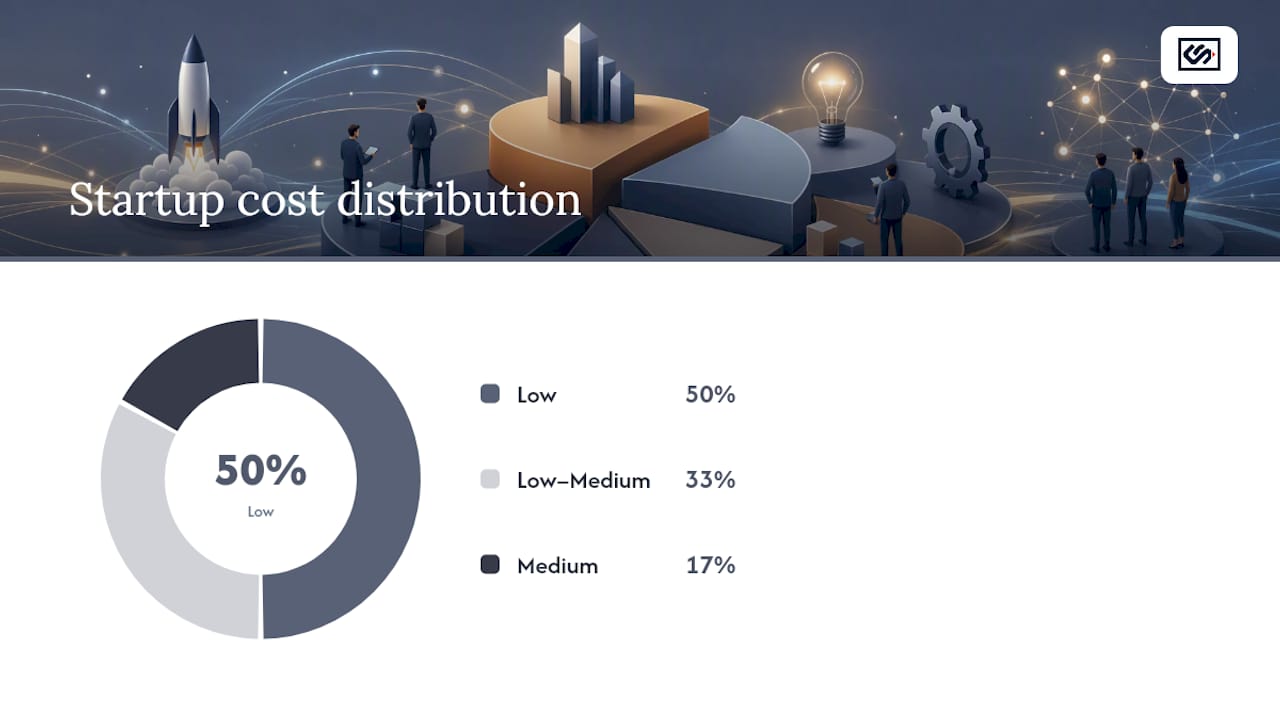
The ideas below are organized by category, each with a startup cost band and a one-line first test you can run this week. The US Chamber of Commerce recommends prioritizing ideas that are scalable, adaptable to rapid technological shifts, and grounded in clear market demand rather than trend-chasing. Use that filter as you scan.
| Category | Startup Cost Band | Best Quick Validation |
|---|---|---|
| Local & storefront | Low–Medium | Pop-up or temporary signage test |
| Service & consulting | Low | Sell one session before building a program |
| Digital products & platforms | Low | Landing page with a payment link |
| Creative & maker | Low–Medium | Sell 5 units at a local market first |
| Subscription / recurring revenue | Medium | Manual fulfillment for first 10 subscribers |
| B2B niche services | Low | Cold outreach to 20 target businesses |
Local & storefront (low–medium cost)
Many successful ideas come from solving an everyday problem in a specific neighborhood. Business News Daily notes that adapting a personal skill to a local market need is one of the most reliable starting points.
- A specialty coffee kiosk inside an existing retail space (low build-out, shared foot traffic)
- A mobile notary service operating from a branded vehicle
- A neighborhood tool-lending library with a monthly membership fee
- A pop-up vintage clothing market in a parking lot or community center
- A dog wash station installed inside a pet supply store
- A co-working space in an underused church or community hall
- A local meal-prep kitchen renting certified commercial space by the hour
- A children's art studio that also sells take-home kits
Service & consulting (low cost)
- A fractional operations manager for restaurants with 1–3 locations
- A one-day brand clarity sprint for new food-and-beverage businesses
- A compliance documentation service for small HVAC or electrical contractors
- A social media management retainer targeting local medical practices
- A bookkeeping clean-up service for businesses switching from cash to accrual
- A grant-writing service for small nonprofits and arts organizations
- A hiring and onboarding process design service for businesses under 20 employees
- A customer-experience audit for independent retail stores
Digital products & platforms (low cost)
- A Notion or Airtable template bundle for freelance creatives
- A self-paced online course teaching a specific trade skill (tile setting, upholstery, welding)
- A niche job board for a specific industry (e.g., sustainable agriculture, independent film)
- An AI-prompt library sold as a downloadable product for a specific profession
- A SaaS micro-tool that automates one repetitive task for a niche audience
- A paid newsletter covering regulatory changes for a specific industry
- A digital asset marketplace for motion graphics or UI components
- An online booking and scheduling tool for mobile service providers
Creative & maker (low–medium cost)
- Custom pet portraits sold as prints and digital downloads
- Hand-poured candles with locally sourced botanicals, sold at farmers markets and online
- A letterpress stationery studio offering wedding and event printing
- A custom furniture workshop specializing in small-space solutions
- A ceramics studio that offers both finished goods and wheel-throwing classes
- A screen-printing shop focused on local sports leagues and school events
- A laser-engraving service for corporate gifts and awards
- A textile dyeing studio offering natural-dye workshops and finished goods
Subscription / recurring revenue (medium cost)
- A curated local-produce box delivered weekly to apartment buildings
- A monthly "maker box" with craft supplies and a project guide
- A subscription lawn care and seasonal cleanup service
- A software tool with a monthly license for a niche professional audience
- A managed IT support plan for businesses with 5–25 employees
- A monthly content creation retainer for one specific industry vertical
- A wine or specialty food club with local producer partnerships
B2B niche services (low cost)
- A safety training and documentation service for construction subcontractors
- A vendor onboarding and contract management service for property managers
- A white-label fulfillment service for small e-commerce brands
- A data-cleaning and CRM hygiene service for sales teams
- A commercial photography retainer for real estate agents
- A fleet graphics and vehicle branding service for local delivery companies
- A technical writing service for software companies producing user documentation
How to generate business design ideas that fit your skills and market
The three highest-leverage methods for generating ideas are customer-problem interviews, hobby-to-offer mapping, and trend synthesis using Jobs-to-be-Done (JTBD) and SCAMPER. Each one surfaces a different kind of opportunity, and running all three in a single afternoon gives you more raw material than most entrepreneurs gather in months.
LLM-assisted agentic workflows can also expand idea diversity and speed early-stage concept generation, which is useful when you need a wide set of directions to test quickly. Tools like ChatGPT or Claude work well as a brainstorming partner when you give them a specific constraint: "Generate 20 business ideas for a former nurse who wants to work remotely and has a $5,000 budget."
Here is a solo workshop template you can run in two hours:
- Customer-problem interviews (45 minutes): Call or message five people in your target market. Ask one question: "What is the most frustrating part of [specific task or situation]?" Write down the exact words they use, not your interpretation.
- Hobby-to-offer mapping (20 minutes): List your top five skills or hobbies. For each one, write one sentence describing who would pay for that skill and what problem it solves for them.
- SCAMPER pass (20 minutes): Pick one existing business in your area or industry. Apply each SCAMPER lens: Substitute, Combine, Adapt, Modify, Put to other uses, Eliminate, Reverse. Each lens should produce at least one new idea variant.
- JTBD filter (15 minutes): For your top three ideas, write the job statement: "When [situation], I want to [motivation], so I can [outcome]." If you cannot complete that sentence clearly, the idea needs more sharpening.
- Capture outputs: Write each idea as a one-sentence pitch. You should have 10–20 rough concepts by the end.
Online signals sharpen this process without turning into fad-chasing. Search Google Trends for your category, scan relevant subreddits for recurring complaints, and check local classifieds for services people are actively seeking. The goal is to find a gap between what people want and what is currently available, not to chase whatever is trending this month.
Pro Tip: Build an "economic empathy map" before you price anything. For your target customer, write down: what they currently spend on this problem, how they prefer to pay (subscription, one-time, per-use), and what would make them feel the price was obviously fair. Pricing friction kills more good ideas than bad products do.
How to evaluate and validate a business idea quickly
The fastest validation is a Minimum Viable Economy (MVE): a manual simulation of the payment and fulfillment loop that proves willingness to pay before you build anything. An MVE does not require a product, a website, or a team. It requires one customer, one transaction, and one delivery, however rough.
Use this checklist before spending more than two weeks on any idea:
- Unit of exchange: Can you name exactly what the customer pays for and what they receive?
- Acquisition test: Have you found at least one person willing to pay, through a real conversation or a landing page with a payment link?
- Fulfillment simulation: Can you deliver the offer manually, even if it takes ten times longer than a scaled version would?
- Basic unit economics: Do you know your Customer Acquisition Cost (CAC), Average Order Value (AOV), and contribution margin, even as rough estimates?
- Wizard-of-Oz test: If the product does not exist yet, can you fake the output manually to test whether customers value the result?
Short, low-cost validation experiments, like landing pages, manual fulfillment tests, or A/B ad tests, help you find which messages and offers resonate before investing in a full build. IDEO's examples show that one-block experiments, changing a single variable like price or messaging, produce directional learning fast.
A suggested two-week validation timeline:
- Days 1–3: Define the unit of exchange and write a one-paragraph pitch.
- Days 4–7: Run an acquisition test (post in a relevant community, send 20 direct messages, or run a $50 ad).
- Days 8–11: Fulfill the offer manually for your first 1–3 paying customers.
- Days 12–14: Review CAC, AOV, and contribution margin. Decide: iterate, pivot, or scale.
For ballpark cost ranges: service pilots typically run $0–$500 (your time plus basic tools); product pilots run $500–$3,000 (samples, packaging, a simple website); retail or storefront pilots run $1,000–$10,000 depending on location and build-out requirements.
Your one-page business design canvas
One page that links your offer, your customer, your revenue model, and your delivery is enough to run the first tests. Practical Business Design's Canvas traces strategic ambition down to delivery projects, keeping experimentation aligned with measurable outcomes. The version below is condensed for early-stage use.
| Canvas Cell | Service Example | Local Storefront Example | Digital Product Example |
|---|---|---|---|
| Customer segment | Freelance designers, 2–10 years in | Apartment renters, urban neighborhood | Independent bookkeepers |
| Value proposition | Save 5 hours/week on admin with ready-made templates | Fresh local produce, no subscription lock-in | Automated monthly close checklist |
| Unit of exchange | template bundle, one-time | produce box, weekly | SaaS license, monthly |
| Revenue streams | Direct sales, affiliate upsells | Weekly box revenue, add-on items | Monthly recurring subscriptions |
| Channel | Gumroad, Instagram, email list | Neighborhood app, door hangers, pop-up | Google Ads, accounting forums, referrals |
| Cost drivers | Design time, platform fees | Produce sourcing, delivery labor | Hosting, customer support, payment processing |
| Key risks | Commoditization, low repeat purchase | Supplier reliability, churn after first box | Churn, feature parity with larger tools |
Watch these five metrics in your first 90 days:
- CAC: What does it cost to acquire one paying customer?
- Churn rate: What percentage of customers do not return or cancel?
- AOV: What is the average dollar value per transaction?
- Contribution margin: Revenue minus direct costs, per unit.
- Time to first payment: How many days from first contact to paid transaction?
Why storefront and signage are part of your business design
Signage and storefront design are operational levers, not decoration. They validate demand and signal clarity to passing customers before a single conversation happens. Treating them as testable design elements, rather than fixed costs, is one of the most underused tactics in small business.
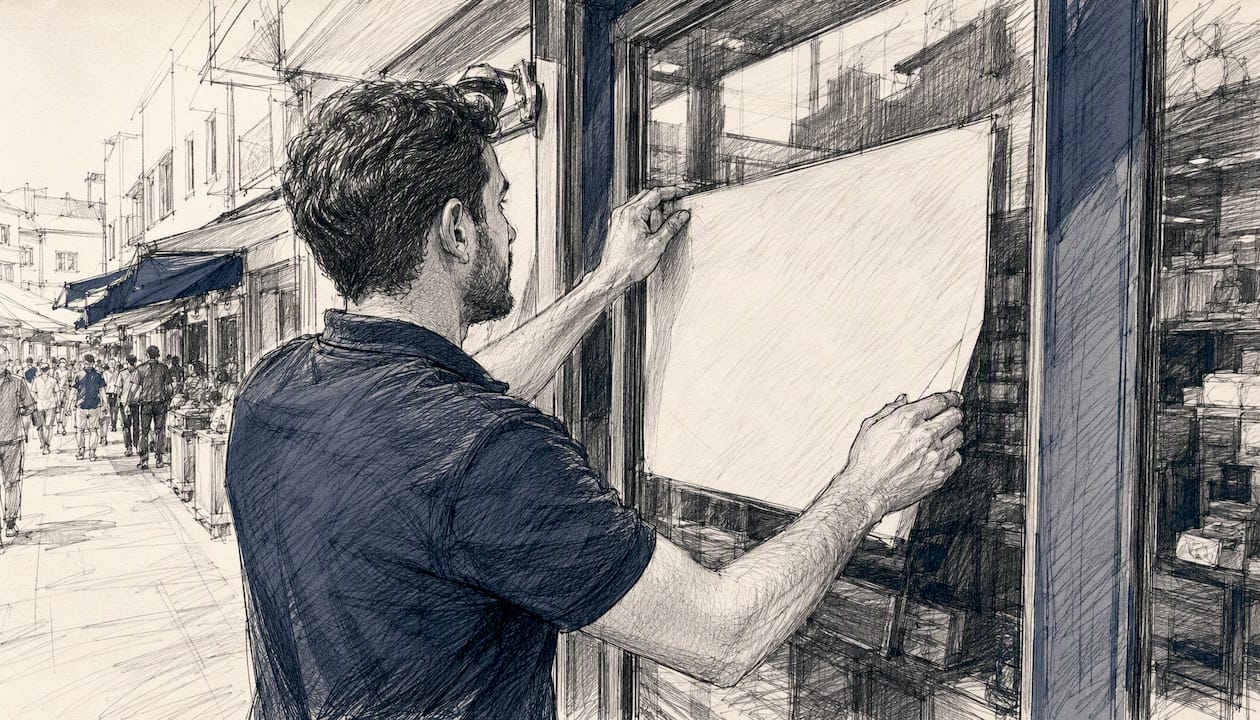
IDEO U's design-thinking approach supports running small, rapid experiments that change one variable at a time. Applied to a storefront, that means testing your messaging on a window vinyl before committing to a permanent sign. If foot traffic or inquiries increase, you have validated the message. If they do not, you have learned something for under $200.
Use this checklist when assessing a storefront or pop-up location:
- Sightlines: Can a pedestrian read your primary message from 30 feet away?
- Messaging clarity: Does the sign answer "What do you sell and who is it for?" in under five seconds?
- Call to action: Is there a clear next step visible from the street (enter here, scan QR, open daily 9–6)?
- Payment friction: Can a customer pay within 60 seconds of deciding to buy?
- Hours and staffing: Are your hours posted visibly, and is someone always available during posted hours?
- Foot-traffic estimate: Have you counted actual pedestrian or vehicle traffic at your target location at different times of day?
Pro Tip: Run a Minimum Viable Signage test before ordering custom fabrication. Install a window vinyl or a foam-board poster with your core message and a QR code. Track scans and walk-ins for two weeks. The data tells you whether the message works before you invest in channel letters or a monument sign.
Most entrepreneurs under-invest in physical cues. A clear, well-placed sign functions as your best salesperson: it works every hour you are open, never calls in sick, and communicates your value proposition to every person who walks by.
The tradeoff most entrepreneurs get wrong
Speed versus polish is the central tension in business design, and most entrepreneurs resolve it the wrong way. They polish before they test. They spend three months on a logo, a website, and a brand guide before talking to a single paying customer.
If you were starting today, the right move is to pick the idea with the clearest unit of exchange and run an MVE within two weeks. Not a business plan. Not a brand identity. One transaction, manually fulfilled, with a real customer paying real money. That single data point is worth more than any amount of planning.
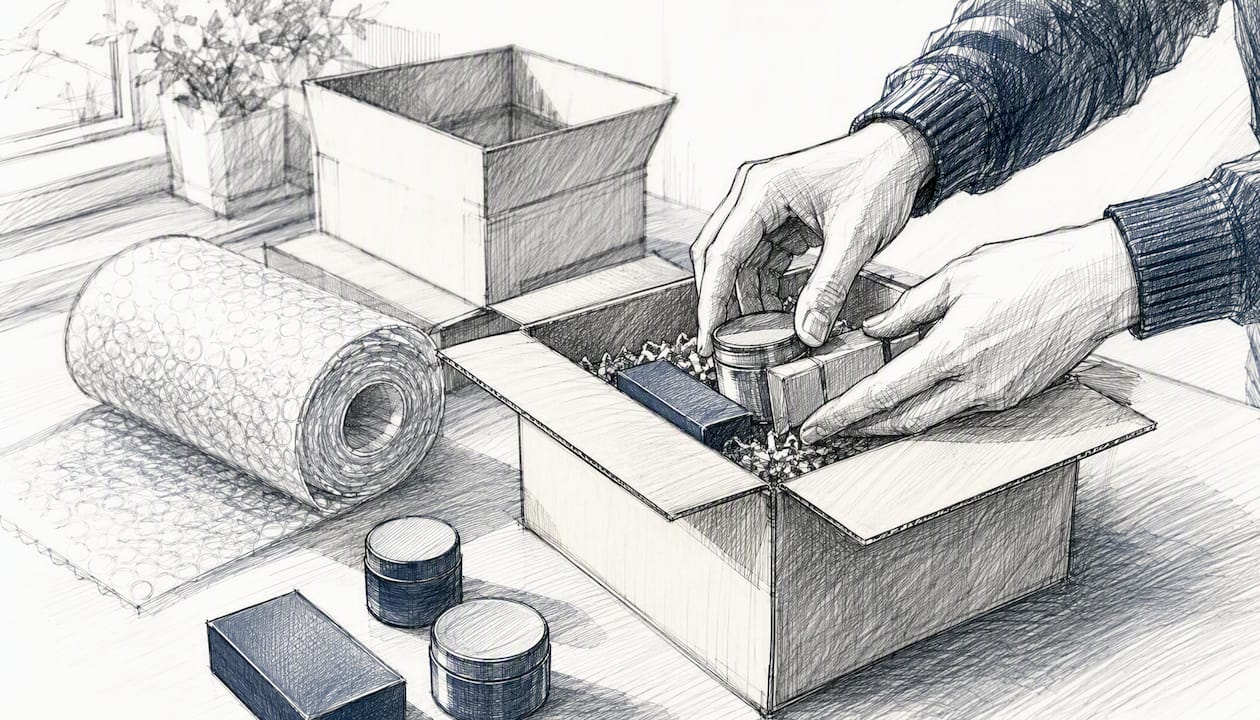
The habit that kills analysis paralysis is a hard deadline. Give yourself 48 hours to choose one idea from your shortlist. Then give yourself 14 days to get one person to pay for it. If you cannot do that in 14 days, the idea is not ready, or you are not ready to sell it, and both of those are useful things to know.
Crispsign helps you test and scale your storefront presence
For businesses moving from idea to physical location, professional signage accelerates learning. A clear, well-fabricated sign reduces messaging friction and increases the number of people who stop, read, and walk in. That is a testable variable, and it is one of the fastest ways to validate whether your location and offer are working together.
Crispsign produces custom storefront signage built to your specifications and shipped nationwide, with options for DIY installation or coordinated professional installation. The product line covers everything a storefront test or a committed build needs: window and wall vinyl graphics for low-cost message tests, exterior channel letters and illuminated cabinet signs for permanent visibility, monument signs, interior lobby logos, and full vehicle graphics including wraps and cut-vinyl decals for mobile businesses. Every sign is designed online, fabricated to spec, and delivered ready to install.
If your business design calls for a visible, credible storefront presence, get a custom sign quote at Crispsign and see how fast you can go from concept to installed.
Sources
The resources below cover the core frameworks referenced throughout this article. Start with the first two if you are new to business design as a discipline.
- How to build a better business through design | IDEO U
- Top trending business ideas | US Chamber of Commerce
- Practical Business Design
FAQ
What are the top 10 small business ideas right now?
High-opportunity categories include mobile services (pet grooming, notary, cleaning), digital products (templates, courses, niche SaaS), B2B niche consulting, subscription boxes, and local food or wellness experiences. The US Chamber of Commerce recommends prioritizing ideas that are scalable and grounded in clear market demand.
How do I create a business design for my company?
Start with a one-page canvas that maps your customer segment, value proposition, unit of exchange, revenue streams, delivery channel, cost drivers, and key risks. Then run a Minimum Viable Economy test within two weeks to validate willingness to pay before investing in a full build.
What businesses are likely to grow in 2026?
Businesses that combine a repeatable model with low customer acquisition costs tend to scale most reliably.
What is the best business to start with $10,000?
Service businesses, such as consulting, bookkeeping clean-up, or compliance documentation, typically require the least capital and can reach profitability fastest. A $10,000 budget also covers a solid digital product launch (course, template bundle, or micro-SaaS) including tools, ads, and a simple website.
How does business design differ from graphic design?
Business design shapes how a business works, covering the offer, revenue model, and delivery channel. Graphic design shapes how a business looks. Both matter, but business design comes first: a well-designed model with rough visuals outperforms a beautifully branded idea with broken economics every time.