Halo Lit Channel Letters: Specs Business Owners Must Include

Halo-lit (reverse/backlit) channel letters are the right call when you want a premium, architectural sign that emphasizes silhouette and a soft glow rather than a bright, glowing face. Success comes down to three things: fabrication quality, the mounting substrate, and the LED hardware behind the letters. Your next move is simple: send a photo of your wall and your logo artwork to a fabricator for a shop drawing and quote.
TL;DR:
- Proper fabrication and installation details, such as material choice, standoff distance, and wall surface, are crucial to achieving a uniform and crisp halo effect.
- Aluminum is the standard for return walls and faces, with acrylic or Lexan backs providing even light diffusion and moisture resistance, especially for outdoor use.
- Ensuring LED modules are UL-listed, IP66-rated, and properly sealed with silicone is vital for long-term performance and outdoor durability.
- Mounting methods like direct, standoff, or backer panel can significantly influence the halo's appearance, with shorter standoffs around 1 inch recommended for sharpness.
- Clear communication of artwork, wall photos, LED preferences, and installation timing helps secure an accurate, cost-effective quote and smooth project execution.
Table of Contents
- What halo lit channel letters are and how they differ from face lit letters
- Materials and fabrication options for halo lit letters
- Mounting, substrate, and what controls halo performance
- Lighting and electrical specs to require in every quote
- Design choices that keep a halo looking sharp
- Typical costs, lead times, and what a fabricator needs to quote accurately
- Maintenance, weatherproofing, and common fixes
- Compliance with local signage regulations and permits
- Energy efficiency and sustainability considerations
- Installation process overview and what to expect on site
- Why a production-first partner matters for halo-lit signs
- How to order halo lit channel letters from CrispSign
- Authoritative specs and guides worth checking
- Sources
- FAQ
What halo lit channel letters are and how they differ from face lit letters
Halo-lit channel letters use an opaque metal face with LEDs mounted inside, aimed backward instead of forward. The light spills out behind the letter and onto the wall, creating a glowing outline, or halo, around each shape. According to Tectonics' explanation of the format, this reverse orientation is what separates halo-lit signs from every other illuminated letter style.
Face-lit channel letters work the opposite way: the acrylic face itself lights up, so the letter glows solid and bright, readable from blocks away in daylight or dark. Halo-lit letters trade that daytime punch for a nighttime effect that looks upscale, almost custom-lit, like the building itself is glowing around the lettering.
The difference shows up most at night. Done well, a halo reads as a clean, even ring of light with a crisp letter silhouette in the middle.
- A well-fabricated halo looks intentional: uniform width, consistent color, sharp letter edges.
- A poorly fabricated halo looks washed out: uneven brightness, visible hot spots, or a blurry outline that fights with the wall texture.
Getting a crisp halo instead of a smudge comes down to the choices covered in the next few sections.
Materials and fabrication options for halo lit letters
Most halo-lit letters start with aluminum for the returns (the sides of the letter) and a face made of aluminum or another rigid metal, since the face needs to be opaque to block forward light. The back of the letter, where the light escapes, is typically acrylic or polycarbonate (Lexan), chosen for its light diffusion and impact resistance.
You will also choose between trimless and trimmed faces. Trimless construction hides the seam between face and return for a cleaner daytime look, but it can be pricier to fabricate. Trimmed faces show a visible cap, which is less expensive and often unnoticeable once the halo effect takes over at night.
- Aluminum returns hold their shape outdoors and resist corrosion better than thinner metals.
- Acrylic or Lexan backs diffuse LED light evenly while sealing the can from moisture and pests.
- Trimless faces look sleeker in daylight; trimmed faces cost less and disappear at night.
For outdoor installs, sealing matters as much as material choice. Weep holes in the Lexan back let condensation drain instead of pooling, and this is a requirement under UL guidance for fabricated halo letter installation, not just a nice-to-have.
Pro Tip: Ask your fabricator whether LED modules are mechanically secured and silicone-sealed at the edges. Loose modules shift over time and create shadow gaps in the halo.
Mounting, substrate, and what controls halo performance
The wall behind your letters does as much work as the letters themselves. Halo quality depends on how far the letters stand off the wall, what the wall is made of, and whether you need a backer panel to even things out.
- Direct or standoff mounting places letters a fixed distance from the wall using studs or spacers, letting light spread naturally behind the letter for the halo effect.
- Raceway mounting puts the letters on a mounting box that also houses wiring, useful when the wall cannot be drilled or when electrical access needs to stay contained.
- Backer panel mounting adds a painted panel behind the letters before mounting, giving you full control over color and texture regardless of what the wall looks like.
Standoff distance is where a lot of installs go wrong. Older guidance defaulted to around 1.5 inches, but current practice favors shorter standoffs, often close to 1 inch, verified against the specific LED module's output, according to Direct Sign Wholesale's installation guidance. Too far and the halo blurs; too close and it looks pinched.
Substrate matters just as much as distance. Textured stucco, rough masonry, glass, and dark or glossy surfaces all reflect light unevenly, which can turn a clean halo into a patchy one. A painted or color-matched backer panel solves this by giving the LEDs a smooth, predictable surface to bounce off, protecting the wall while guaranteeing consistent glow regardless of what is underneath, a point Tectonics makes clearly when discussing surface reflectance. If your building has any of those surface types, ask for a backer panel before you ask for anything else.
Lighting and electrical specs to require in every quote
The LED system inside your letters determines whether the halo looks even and lasts for years, or fades and flickers within a season. Ask specifically for UL-listed components and, for any outdoor sign, a wet-location or IP66 rating on the LED modules themselves.
- Confirm the LED system carries UL recognition and an IP66 wet rating for outdoor durability.
- Ask for the beam angle: wider optics spread light more evenly across fewer modules.
- Specify Class 2 power supplies, since these are standard for low-voltage sign lighting and required for code compliance.
- Confirm nominal voltage (12V or 24V) and maximum run length per power supply so modules are not overloaded.
The Tetra PowerMAX system is a useful benchmark for what a modern setup should offer: a 24V LED system built for shallow letter cans as thin as 4 inches, with a 170-degree beam angle, an IP66 wet rating, UL recognition, an efficacy of 158 lumens per watt, and a 10-year limited warranty. Those figures are a reasonable checklist to hold any competing system against.
Wiring should follow NEC Article 600, the section of the National Electrical Code governing signs, and connections should be made by a licensed electrician. Per the wiring instructions for fabricated metal letters, power supplies should never sit inside the letter can itself, since heat buildup shortens their life and makes servicing harder. If a halo sign flickers or dims unevenly after install, the two most common culprits are an overloaded power supply feeding too many modules, or a loose pigtail connection at the module.
Design choices that keep a halo looking sharp
Halo-lit letters do their best work in settings where a building gets seen at night and where brand image matters as much as raw visibility: upscale retail storefronts, hotel and restaurant facades, corporate lobbies, and office building entrances. According to Channelletter, luxury retailers and corporate buildings favor the format specifically because it reads as architectural rather than commercial, while still holding a strong daytime silhouette.
- Choose fonts with moderate to thick stroke widths since thin strokes can let the halo bleed together and blur letter shapes.
- Reserve very tight letter spacing for smaller installations, since halos on closely set letters can merge into one glow rather than staying distinct.
- Match LED color temperature to your brand: warm white (around 2700 to 3000 Kelvin) reads upscale and inviting, while cooler white reads modern and sharp.
If your brand needs strong daytime and nighttime visibility, combining halo-lit and face-lit elements, sometimes called dual-lit, gives you both a bright daytime face and a glowing nighttime outline in one sign.
Typical costs, lead times, and what a fabricator needs to quote accurately
Cost varies by project because so many variables stack on top of each other: letter count, letter height, return depth, material grade, LED system quality, and how complex the mounting is. A backer panel, a raceway, or a difficult wall surface all add labor and material cost beyond the letters themselves.
Lead time also depends on order volume, custom finish requests, and installation scheduling, so treat any estimate as a starting point rather than a guarantee until a fabricator has reviewed your specific project.
To get an accurate quote back quickly, send a fabricator:
- Vector artwork of your logo or lettering, ideally in a format like an AI or EPS file.
- A clear photo of the mounting surface, including its texture, color, and any nearby obstructions.
- Your preferred LED color temperature and desired halo width.
- Your preferred mounting method, whether direct, standoff, or backer panel.
- Your in-hand or install date, so production and shipping can be scheduled around it.
The more of this you provide upfront, the fewer revision rounds you need before production starts.
Maintenance, weatherproofing, and common fixes
Halo-lit letters need less upkeep than most people expect, but a few checks a couple of times a year keep them performing well. Clean both the face and the back of each letter to remove dust and grime that dulls the halo, and confirm weep holes are clear so condensation can drain rather than pool inside the can.
- Inspect silicone seals and conduit entry points annually, since gaps let in moisture that shortens LED life.
- Check for uneven brightness, which usually means a single failed module rather than a full system problem.
- Replace failed modules individually instead of rewiring the whole letter, since most systems are built in series-parallel segments for exactly this reason.
Pro Tip: If your letters use Lexan backs and you notice pooling or fogging, a replacement Lexan cover with proper weep holes usually solves it faster than resealing the old one.
A licensed sign technician should handle anything involving the power supply, wiring, or module replacement. A building maintenance person can safely manage the simple stuff: wiping down faces, checking for debris in weep holes, and flagging dimming or flickering before it becomes a bigger repair.
Compliance with local signage regulations and permits
Every city and municipality sets its own rules for illuminated signage, covering everything from maximum letter height and total sign area to how bright a sign can be after dark. Halo-lit signs sometimes get treated differently than face-lit signs in local codes, since the visible light source technically illuminates the building surface rather than the letter face itself, and some jurisdictions have specific language addressing that distinction.
Before you commit to a design, check with your local building or planning department about permitted sign types, size limits, and whether illuminated signs need a separate electrical permit on top of a standard sign permit. Historic districts and certain commercial overlays often carry extra restrictions on lit signage, sometimes limiting brightness or requiring specific hours for illumination.
A reputable fabricator will typically ask for your address and building type early in the quote process partly for this reason: it helps flag whether your design needs adjustment before production starts rather than after installation, when changes cost far more. Permits usually take longer to process than the sign itself takes to build, so start that conversation as soon as you have a design direction, not after the sign arrives.
Electrical work on your sign should also meet NEC Article 600 requirements regardless of local permit rules, and most municipalities will not sign off on an install where a licensed electrician has not made the final connections.

Energy efficiency and sustainability considerations
LED systems used in halo-lit letters draw far less power than the neon or fluorescent tubing that used to fill channel letters, and they last considerably longer before needing replacement. Choosing a higher-efficacy LED module, like systems rated around 158 lumens per watt per the Tetra PowerMAX spec sheet, means you get the same visible glow while pulling less electricity from the building's supply.
Material choice plays into sustainability too. Aluminum returns and faces are recyclable at the end of a sign's life, and a well-sealed can with proper weep holes and IP66-rated components lasts longer before any part needs replacing, which cuts down on waste from repeated repairs. Polycarbonate backs, as SF Sign Supply notes, also hold up to weather better than more brittle alternatives, extending the working life of the whole letter can.
If sustainability is a priority for your brand, ask your fabricator about the LED system's rated lifespan and warranty length, since a 10-year limited warranty on the lighting itself is a reasonable marker of a system built to last rather than one you will be replacing in a couple of seasons. A power supply and module setup that is not overloaded also runs cooler and lasts longer, which is one more reason correct load calculations matter as much for sustainability as for basic safety.
Installation process overview and what to expect on site
Installation typically starts well before anyone shows up with a ladder. Once your shop drawing is approved, the fabricator builds the letters to spec, and your installer or electrician should receive a copy of that drawing showing standoff spacing, power supply locations, and wiring layout.
On-site prep usually involves confirming the wall surface can support the mounting hardware, checking that electrical service is available nearby or that conduit needs to be run, and marking letter placement using a template or laser layout from the shop drawing. This step matters most for halo-lit signs specifically, since even small placement shifts change how the halo interacts with wall texture or nearby fixtures.
Physical installation, drilling standoffs or mounting a raceway, positioning letters, and running low-voltage wiring to the power supply, generally takes a matter of hours to a day depending on letter count and wall type. Final electrical connections should be made by a licensed electrician following NEC Article 600, after which the sign gets tested for even illumination before the crew leaves.

Total project timelines from approved design to finished installation depend heavily on production scheduling and permit approval, both of which vary enough by project that a fabricator should give you a specific timeline once your design and location are known rather than a generic estimate.
Why a production-first partner matters for halo-lit signs
The gap between a halo-lit sign that looks architectural and one that looks like a bad attempt at it almost always comes down to who built it and how closely the shop drawing was followed. An online-first production workflow aimed at catching potential issues before fabrication starts pairs professional-grade fabrication with nationwide shipping and coordinated installation.
When you review a shop drawing, check four things before approving it: the exact LED specs (voltage, beam angle, IP rating), how modules are grouped to their power supply, the standoff spacing for your specific wall, and the backer panel color if your substrate needs one. Catching a mismatch here costs you five minutes. Catching it after installation costs you a service call.
— Nick
How to order halo lit channel letters from CrispSign
A product line covers this category of sign, built to order through an online workflow that provides a shop drawing, UL-compliant components, and shipping nationwide, with installation coordination available if desired.
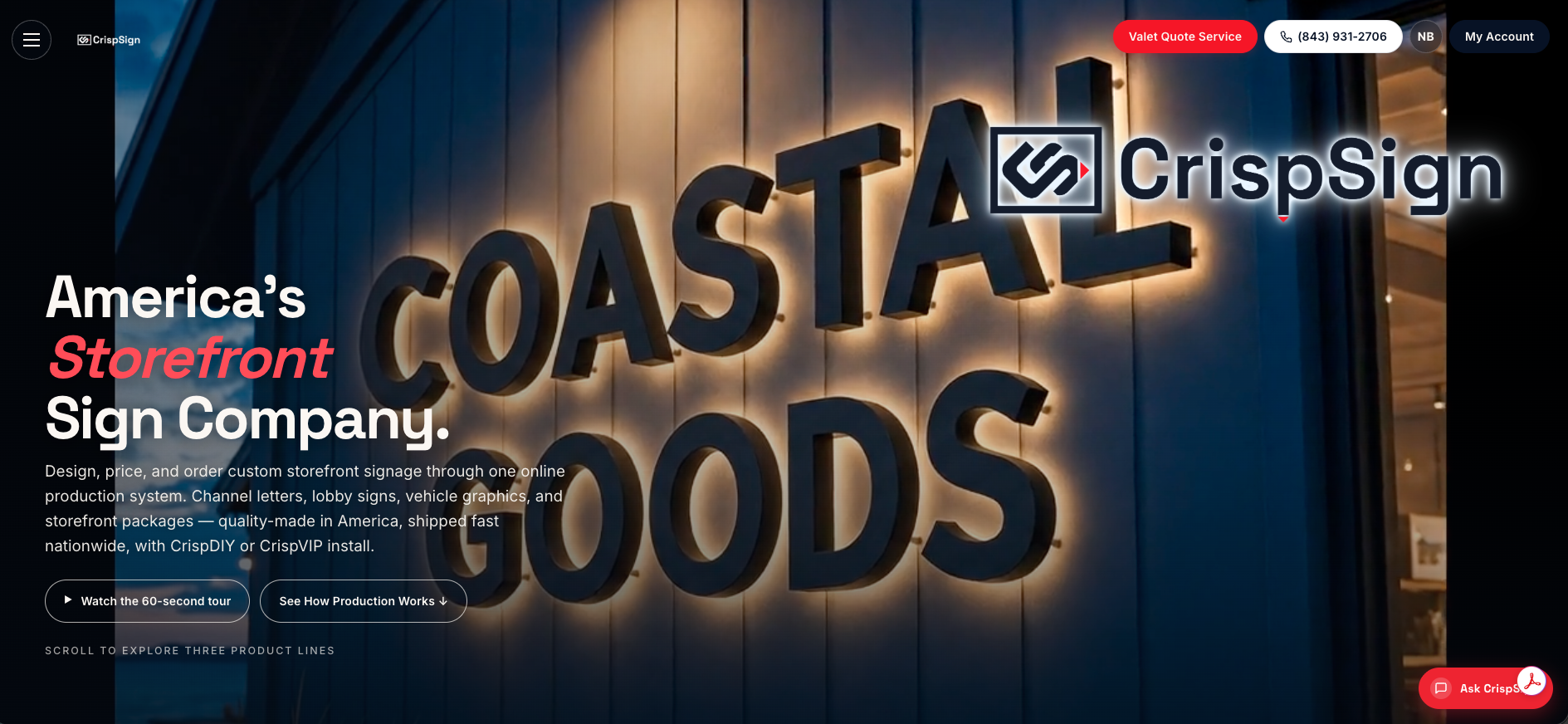
Getting an accurate quote takes four things: your vector artwork, a photo of the exact wall or surface where the letters will mount, your preferred LED color temperature, and your desired standoff distance if you already have a preference. Send those through the Beacon product hub and you will get a design built to your specifications rather than a generic template stretched to fit.
If your project is an interior lobby logo instead of an exterior storefront sign, the same halo-lit approach applies through CrispSign's LobbyLogo line, where artwork setup and design help are available as add-on services. Start your Beacon quote today and get a shop drawing back before you commit to a final design.
Authoritative specs and guides worth checking
Before signing off on a fabricator or a quote, cross-check the hardware and wiring claims against the manufacturer's own documentation rather than taking a sales sheet at its word.
- The Tetra PowerMAX spec sheet lists exact beam angle, IP rating, and efficacy figures for one widely used LED system.
- Tectonics' overview explains how substrate texture and reflectance change halo uniformity in practice.
Each of these ties directly to warranty terms and code compliance, so keep copies with your project file, not just your fabricator's word for it.
Sources
FAQ
How much do channel letter signs typically cost?
Cost depends on letter count, size, materials, LED quality, and installation complexity, so there is no single flat rate that applies across projects. The most reliable way to get a real number is to send a fabricator your artwork and a photo of your mounting surface for a project-specific quote.
What are illuminated channel letters?
Illuminated channel letters are three-dimensional letters, typically metal, with LED lighting built inside to make them glow. They come in different lighting styles, including face-lit, halo-lit, and dual-lit, each producing a different visual effect.
What is the difference between channel letters and reverse channel letters?
Standard channel letters are usually face-lit, meaning the front face of the letter glows. Reverse channel letters, also called halo-lit letters, keep the face opaque and aim the light backward instead, creating a glowing outline on the wall behind the letter, as explained in Tectonics' breakdown of the format.
What is the difference between face-lit and halo-lit signs?
Face-lit signs have a glowing acrylic face, making the letter itself bright and highly visible day and night. Halo-lit signs keep the face solid and dark, projecting light backward to create a glowing ring around the letter, a look often chosen for its architectural, premium appearance according to ChannelLetter.com.