Avoid the Three Delays That Eat Your Sign Production Timeline for SMBs
Most storefront signs move through production in a predictable window: vinyl and window graphics in 1 to 3 business days, flat panels in 3 to 7, channel letters in 5 to 15, and illuminated or monument signs in 2 to 4 weeks or more. The biggest threat to that window isn't the fabrication shop. It's approvals, artwork errors, and materials sitting on backorder. Start your approvals and lock your final artwork today, and the rest of the schedule tends to take care of itself.
TL;DR:
- Delays most often stem from approval processes, artwork errors, and backordered materials rather than fabrication time itself.
- Simple vinyl decals or flat panel signs can be completed within a week after artwork approval, but complex signs like monument signs may require a month or more.
- Permitting, electrical, and structural approvals can add weeks to the schedule, especially for illuminated or monument signs.
- Early planning, fixed approval deadlines, and clear communication with vendors help prevent delays and keep the timeline on track.
- Rush services typically only speed up fabrication or shipping, not engineering, curing, or permitting, which are the main bottlenecks.
Table of Contents
- Sign Production Timeline by Type: What to Actually Expect
- Inside the Sign Making Process: From Order to Install
- How ADA Rules and Permits Reshape Your Schedule
- Building a Schedule That Actually Holds Up
- When to Pay for Rush Production
- Where Sign Timelines Actually Go Wrong
- Get Your Sign Fabricated and Installed Without the Guesswork
- Where to Go Deeper on Sign Codes and Fabrication
- Sources
- FAQ
Sign Production Timeline by Type: What to Actually Expect
The range you land in depends less on your business and more on what the sign is made of and where it hangs. A single-color vinyl decal is a same-week job. A monument sign with foundation work and electrical hookups can eat a month.
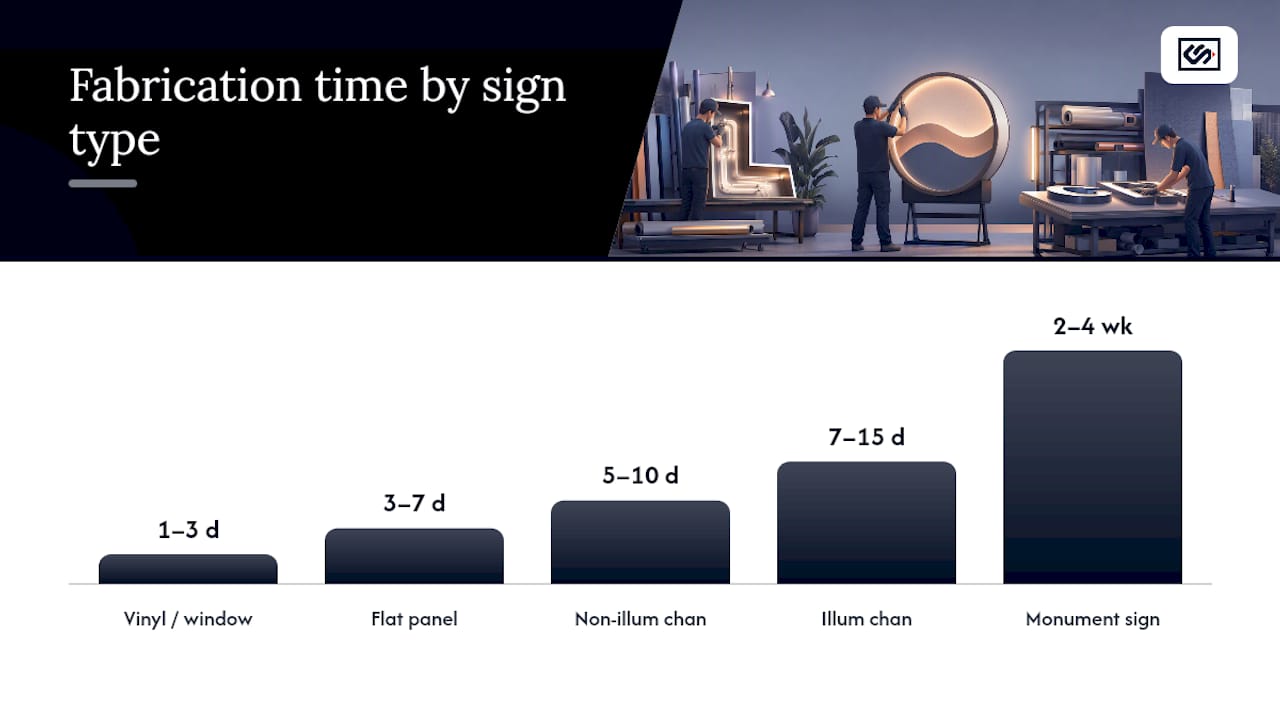
Here's how the typical fabrication windows break down for the sign types most SMB storefronts order:
- Vinyl and window graphics: 1 to 3 business days once artwork is approved. This is the fastest category because there's no engineering step.
- Flat panel signs (acrylic, aluminum, PVC): 3 to 7 business days, depending on finish and mounting hardware.
- Non-illuminated channel letters: 5 to 10 working days for cutting, laminating, and assembly.
- Illuminated channel letters: 7 to 15 working days, since LED sourcing and electrical assembly add steps.
- Monument signs: 2 to 4 weeks or longer, especially when a foundation, permit, or custom masonry finish is involved.
- Vehicle graphics and wraps: 2 to 5 business days for cut decals; full wraps often need 3 to 7 days including cure time.
A few variables push any of these ranges toward the longer end. Signs that need structural engineering sign off, electrical permitting, or a licensed electrician for hookup add review cycles you can't fabricate your way around. Paint and vinyl need cure time before laminating or shipping, and rushing that step is how you end up with bubbling or peeling six months later. Custom mounting hardware, standoffs, and raceways sometimes require a second design pass if wall material wasn't confirmed up front.
If you're a small business ordering a single flat panel sign with a clean, pre-approved file, a week is realistic. If you're planning an illuminated monument sign with a permit application in the mix, plan on a month minimum, and treat anything faster as a bonus.
Inside the Sign Making Process: From Order to Install
Every reputable shop runs your order through the same core stages. Understanding them helps you spot exactly where a delay is happening instead of just watching the calendar slip.
- File review and proofing. Your production schedule doesn't start the day you place an order. It starts the day your artwork is approved. Files arriving in the wrong format, missing bleed, or using RGB instead of CMYK color values routinely add one to three days to a project before fabrication even begins.
- Material staging. Substrates, LED modules, and vinyl rolls need to be pulled and confirmed in stock. Shops that keep minimum inventory on common materials avoid the multi-day stalls that come from a backordered component, which is one of the most common reasons a quoted timeline slips.
- Fabrication. This is where cutting, routing, welding, laminating, and wiring happen. A flat panel might take a few hours on the shop floor; a set of illuminated channel letters can take two to three full days of hands-on work.
- Quality control. QC checkpoints catch color mismatches, uneven trim, weak welds, and wiring faults before a sign ever leaves the building. Skipping this gate is how a sign shows up on-site with a defect that forces a full remake.
- Shipping and installation coordination. Site access, electrician availability, and lift rental all need to line up with your delivery date, and any one of them slipping can push install by days even after the sign itself is finished.
Pro Tip: Ask your sign vendor for a written proof checklist before you submit final art. Catching a font substitution or a missing bleed line on day one is free. Catching it after fabrication means paying for a reprint.
How ADA Rules and Permits Reshape Your Schedule
Permits and code compliance are the part of a sign production timeline most business owners forget to budget for, and they're often the slowest-moving piece. Municipal sign permits can take anywhere from a few days to several weeks depending on your city, and electrical or structural permits for illuminated and monument signs almost always add review time on top of that.
Interior tactile signage carries its own set of rules. The Access Board's Chapter 7 spells out mounting height ranges and required clear floor space for ADA tactile characters, and those specs often can't be finalized until someone measures the actual door and wall on-site. A sign designed before that site check can require rework once installers realize the latch side or floor clearance doesn't match the plan.
Gather this documentation before you request a quote, not after:
- Site photos of the mounting wall or door
- Door latch side and swing direction
- Building elevation drawings, if available
- Landlord or property management sign-off requirements
- Any HOA, historic district, or municipal sign code restrictions
Looping in your landlord, general contractor, and architect early avoids the late-stage design change that resets your clock. A shared sign schedule exported to a spreadsheet or BIM file keeps everyone working from the same numbers instead of trading emails.
Building a Schedule That Actually Holds Up
A sign production schedule needs five checkpoints, not fifty. Nail these and you'll have a deadline you can actually commit to internally.
- Artwork approved. Nothing else starts until this is locked. Set an internal deadline, not just a vendor deadline.
- Materials staged. Confirm substrates and components are in hand, especially for illuminated signs with LED components.
- Fabrication started. Get a start date, not just a delivery date, so you know if the shop is running behind before it's too late to react.
- QC passed. Ask for confirmation the sign cleared quality checks before it ships.
- Installation booked. Lock the installer, electrician, and site access at the same time you confirm ship date, not after.
A clean artwork checklist, an early permit filing, and consolidated approval from one decision maker (not a committee) cut most of that buffer need before you ever need to use it.
When to Pay for Rush Production
Rush service is real, but it has limits. Simple vinyl and flat panel signs can sometimes be turned around in 24 to 72 hours for an added fee. Illuminated channel letters and monument signs almost never compress below their engineering and curing minimums, no matter what you're willing to pay.
Expedited fees typically cover moving your job ahead of the queue and paying overtime labor, not skipping steps. Be direct with your vendor about what "rush" actually includes:
- Confirm whether rush pricing covers shipping speed, production speed, or both.
- Ask if any materials will be substituted to hit the faster date.
- Ask whether QC checkpoints are shortened or kept in full.
A vendor running a documented, portal-based workflow tends to shave real days off the process, since approved artwork and past specs are saved and don't need to be resubmitted for a reorder or a second location.
Pro Tip: If your timeline is tight, ask about expedited options before you finalize your design, not after. Some finishes and mounting styles simply can't be rushed, and knowing that up front saves you from designing yourself into a corner.
Where Sign Timelines Actually Go Wrong
The same three mistakes show up on almost every delayed sign order. Late approvals stall fabrication that's otherwise ready to start. Underestimating permit review time turns a two-week job into a six week one. Ignoring material lead times, especially for LEDs, means a finished design sits waiting on parts. Fix the approval bottleneck first. It's the one entirely within your control.
— Nick
Get Your Sign Fabricated and Installed Without the Guesswork
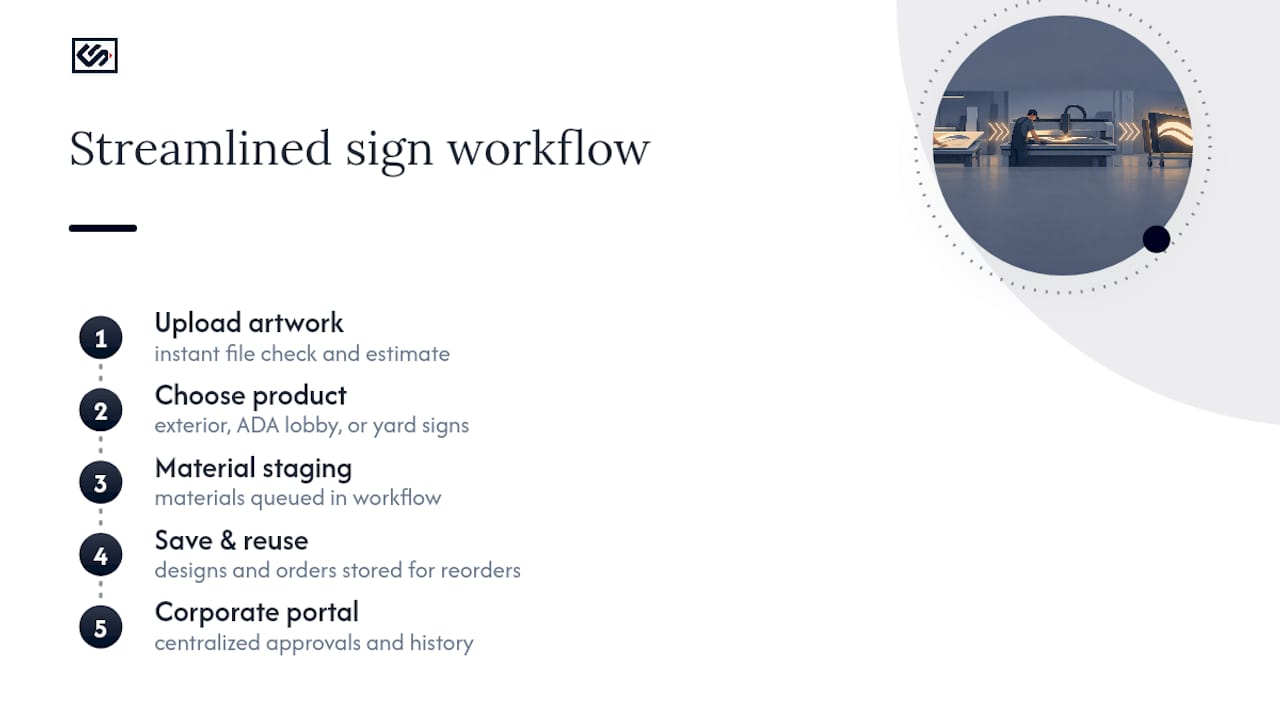
Some online sign providers give you a way to skip the back and forth that eats most sign timelines: one online order, built to your specs, with file checks and material staging built into the workflow. That means fewer surprise delays between "approved" and "installed."
Here's what that looks like in practice. Upload your artwork and get an instant estimate instead of waiting on a callback. Browse exterior sign options like channel letters, carved cedar signs, and yard signs, or start with an ADA-compliant lobby sign if your interior signage needs to meet Chapter 7 mounting specs. Some sign providers save every design and past order to your account, so a reorder or a second location doesn't mean rebuilding your files from scratch. If you're managing signage across multiple locations, the free Crisp Corporate portal keeps every approved design and order history in one place.
Ready to see your own timeline? Start your design and get a real production estimate before you commit to anything.
Where to Go Deeper on Sign Codes and Fabrication
For the full regulatory detail behind tactile sign placement, mounting height, and clear floor space, the Access Board's Chapter 7 is the primary source. For a closer look at how production shops structure their workflow from design to delivery, the Sign Customiser production guide breaks down pre-production gates in detail, and George and Willy's fabrication guide walks through concept-to-install timing by sign type.
Sources
- Chapter 7: Communication Elements and Features — Access Board
- Sign Production Workflow: Design to Delivery Guide - Sign Customiser Blog
- Sign Fabrication: guide from concept to installation – George and Willy
- How to develop a proper signage schedule with an architect, owner and general contractor — Sign Guys NYC
FAQ
How Long Does a Typical Storefront Sign Take to Produce?
Simple signs like vinyl decals or flat panels take 1 to 7 business days once artwork is approved. Illuminated channel letters run 7 to 15 working days, and monument signs commonly take 2 to 4 weeks depending on permitting and construction complexity.
What Causes the Most Delays in Sign Production?
Incorrect artwork files, backordered materials, and slow approval turnaround cause the majority of missed deadlines. A documented production workflow with file review and material staging gates catches most of these before they cost you days.
Do ADA Requirements Add Time to Sign Installation?
Yes. Tactile interior signs must meet mounting height and clear floor space rules from Access Board Chapter 7, which sometimes requires an on-site measurement before final design and placement are locked in.
How Much Buffer Should I Add to My Sign Schedule?
Complexity and permit review are the two factors most likely to eat into a tight deadline.
Can I Get a Sign Made Faster Than the Standard Timeline?
Simple signs can sometimes be rushed to 24 to 72 hours for an added fee, though illuminated and monument signs rarely compress below their engineering and curing minimums. Crispsign's saved-design portal at Builder can speed up reorders since approved artwork doesn't need to be resubmitted.