
The Role of Signage in Brand Identity: A Pro Guide

Signage is defined as the primary physical expression of a brand's identity, communicating values, personality, and professionalism before a single word is spoken. The role of signage in brand identity goes far beyond decoration. It shapes first impressions, drives customer trust, and delivers brand recognition at every point of contact. 75% of consumers recommend a business based on its signage alone. That figure, from a FedEx Office survey, confirms that well-executed signage functions as word-of-mouth marketing at scale. For marketing professionals and business owners, understanding how signage shapes brand perception is not optional. It is a core competency.
How signage shapes brand perception and customer trust
Signage acts as the silent voice of your brand. Before a customer reads your website or speaks to your team, they read your sign. That moment sets the tone for everything that follows.
Customers judge a brand's relevance within seconds of seeing signage. Design experts describe signage as "the first promise made tangible." That promise either builds confidence or erodes it, and there is no neutral outcome.

Legibility and clarity are the two most direct drivers of that confidence. Over 60% of consumers say unclear signage negatively impacts their perception of a business, leading to lost sales and reduced trust. Unclear signage does not just confuse people. It signals that a business does not pay attention to detail.
The business case for getting this right is concrete:
- Foot traffic: Well-designed signage increases physical store foot traffic by up to 20%.
- Word of mouth: 75% of consumers recommend a business based on its signage quality.
- Trust signals: Signage consistency communicates professionalism at every stage of the customer experience.
- Emotional connection: Color, typography, and placement work together to create an immediate emotional response that reinforces brand values.
Pro Tip: Test your signage legibility from the distance and angle a customer would first see it, not from up close at your desk. What reads clearly in a design file often fails at 30 feet.
Retail spaces function like theaters, and signage is the set design that directs both the emotional and physical customer experience. That framing is useful for marketing professionals because it shifts signage from a facilities decision to a brand strategy decision.
What elements of signage build a strong brand identity?
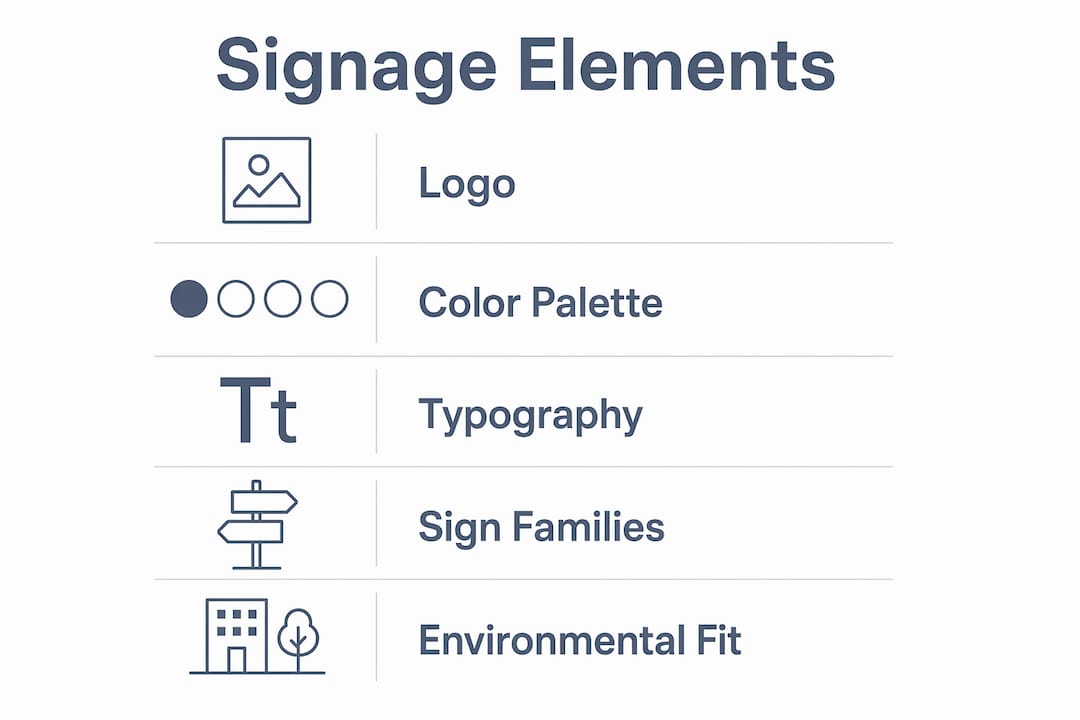
Strong brand signage is not a single sign. It is a coordinated system of visual elements that work together across every physical touchpoint.
Logo, color, and typography alignment
Every sign your business displays must carry the same logo treatment, color palette, and typeface as your other brand materials. Inconsistency between your storefront sign and your business cards, for example, creates a subtle but real credibility gap. Customers notice mismatches even when they cannot articulate why something feels off.
Sign families for multi-location consistency
Using "sign families" that adapt to different physical sites is the most reliable method for maintaining brand consistency across locations. A sign family is a set of templates and specifications that flex for different wall sizes, zoning rules, or architectural constraints while keeping the core visual identity intact. This approach is standard practice for franchise brands and multi-location retailers.
Signage types and their brand functions
| Signage type | Primary brand function |
|---|---|
| Exterior signs | Attract attention, establish location, and deliver the first brand impression |
| Interior signs | Reinforce brand values, support customer decisions, and build trust |
| Wayfinding signs | Guide the customer experience and reduce friction inside your space |
| Promotional signs | Communicate offers while staying consistent with brand tone and design |
Exterior signs attract and inform while interior signs support decisions and reinforce trust. Each type serves a distinct function, and neglecting any one of them creates gaps in the customer experience.
Architectural and environmental fit
A sign that ignores its physical context undermines the brand it is meant to represent. Effective signage for brand identity accounts for building materials, lighting conditions, viewing angles, and surrounding visual noise. A backlit channel letter sign reads well on a busy commercial strip. The same sign on a boutique in a historic district may feel completely out of place.
Pro Tip: Involve a signage specialist during the architectural or interior design phase of any new location, not after construction is complete. Retrofitting signage to a finished space almost always costs more and compromises the result.
Common mistakes that damage brand identity through signage
The most common signage mistake is treating it as a one-time purchase rather than an ongoing brand asset. That mindset leads to a predictable set of problems.
Damaged or poorly maintained signage harms brand credibility more than having no sign at all. A flickering letter, a faded vinyl wrap, or a cracked panel signals neglect. Customers transfer that perception directly to the business itself.
Other frequent mistakes include:
- Late-stage involvement: Bringing signage into the brand rollout process after all other decisions are made forces compromises on placement, size, and materials.
- Ignoring regulatory constraints: Zoning laws, building codes, and ADA requirements vary by location. Businesses that skip this research often produce signage that cannot legally be installed as designed.
- Inconsistent application: Using different fonts, colors, or logo versions across sign types breaks the visual system that builds recognition.
- Prioritizing cost over quality: Low-cost signage that fades, warps, or breaks within a year costs more in replacement and brand damage than a quality sign installed once.
Proactive maintenance schedules are the standard recommendation for permanent signage. Treat your signs the way you treat your website: review them regularly, update them when the brand evolves, and repair damage immediately.
Best practices for maximizing signage impact on branding
The businesses that get the most from their signage treat it as a marketing channel, not a construction task. These are the practices that separate effective programs from forgettable ones.
Involve signage experts early. Early involvement of signage specialists in brand development prevents costly production and installation problems. Signage requires coordination between brand strategy, architecture, engineering, and project management. Starting late means all of those disciplines are working around constraints instead of building toward a shared goal.
Align signage with your digital presence. Your physical signs and your digital marketing should feel like they come from the same brand. Consistent color, typography, and messaging across both channels reinforces recognition and builds a stronger overall impression.
Treat signage as a 24/7 marketing channel. Signage provides hyper-local targeting with a one-time investment, unlike digital ads that stop the moment you stop paying. A well-placed exterior sign works every hour of every day, reaching foot traffic and vehicle traffic that no digital campaign can replicate at the same cost.
Build a maintenance schedule into your brand plan. Set a review cadence, at minimum annually, to assess sign condition, check for brand consistency, and plan updates when your visual identity evolves.
Measure signage effectiveness. Track foot traffic changes after new signage installations. Survey customers about how they found you. Use that data to make the case for signage investment internally.
"Signage consistency communicates professionalism and trust. It is not a detail. It is the foundation of brand credibility at every stage of the customer experience." — Signage as a marketing strategy
Key Takeaways
Signage is a continuous brand asset that directly drives customer trust, foot traffic, and recognition when designed and maintained with the same discipline applied to any other marketing channel.
| Point | Details |
|---|---|
| Signage drives recommendations | 75% of consumers recommend businesses based on signage quality, making it a word-of-mouth tool. |
| Clarity builds trust | Over 60% of consumers lose trust in a brand when its signage is unclear or poorly executed. |
| Consistency requires a system | Sign families and brand standards applied across all sign types prevent credibility gaps. |
| Maintenance is non-negotiable | Damaged signage harms brand perception more than having no sign at all. |
| Early planning prevents costly mistakes | Involving signage experts during brand development avoids expensive retrofits and compromises. |
Why most businesses underestimate their signage
I have watched marketing teams spend months refining a brand guide, then hand off signage to whoever got the lowest quote. The result is almost always the same: a sign that technically displays the logo but communicates nothing about the brand behind it.
The businesses I have seen get this right share one habit. They treat signage the same way they treat a campaign launch. They brief it properly, involve the right people early, and build a review process into the plan. A well-planned wayfinding system inside a location, for example, does not just help customers navigate. It tells them the business thought carefully about their experience before they even arrived.
The uncomfortable truth is that most signage failures are planning failures. The sign itself is rarely the problem. The problem is that no one with brand authority was in the room when the decisions were made. Fix the process, and the signs take care of themselves.
— Nick
Crispsign: signage built for your brand identity
Physical signage is one of the few marketing investments that works around the clock without ongoing spend. Crispsign works with marketing professionals and business owners to produce signage that reflects brand identity accurately and holds up over time.
From lobby and interior signage that reinforces your brand the moment clients walk in, to ADA-compliant signs that meet regulatory requirements without sacrificing design quality, Crispsign covers the full range of branded environments. Vehicle decals and mobile signage solutions extend your brand presence beyond your physical location. We're ready to help you build a signage program that works as hard as the rest of your marketing.
FAQ
What is the role of signage in brand identity?
Signage is the physical expression of a brand's identity, communicating values and personality through design, color, and placement before any verbal interaction occurs. It directly influences customer trust, recognition, and purchase behavior.
How does signage impact customer perception?
Over 60% of consumers say unclear signage negatively affects their perception of a business. Well-designed signage builds immediate credibility and can increase foot traffic by up to 20%.
What signage elements matter most for brand recognition?
Logo treatment, color palette, and typography must be consistent across all sign types, from exterior to wayfinding to promotional. Inconsistency across these elements breaks the visual system that drives recognition.
How often should businesses update or maintain their signage?
The US Chamber of Commerce recommends proactive maintenance schedules for permanent signage, with at minimum an annual review to assess condition, brand alignment, and any needed updates.
Why should signage experts be involved early in brand development?
Early involvement prevents costly retrofits and ensures signage integrates with architectural, regulatory, and brand requirements from the start, rather than being forced to compromise around decisions already made.