$2,000–$7,000: U.S. Vehicle Wrap Cost & Quote Checklist
A professional full vehicle wrap typically runs $2,000 to $7,000, with most sedans landing near $2,500 to $5,000. Partial wraps drop to roughly $500 to $2,000, and DIY materials alone start around $300. The final number swings hard based on vehicle size, film grade, and the shop's local labor rate, so treat every ballpark here as a starting point, not a quote.
TL;DR:
- Vehicle size and shape significantly influence the cost, with larger vehicles like vans and trucks requiring more material and labor, often adding $1,000 to $3,000 to the bid.
- The choice of film material drastically impacts both price and lifespan, with economy vinyl lasting 1 to 3 years and premium cast films lasting 5 to 7 years, affecting long-term value.
- Quotes should itemize material grade, labor hours, and add-ons to avoid inflated bids, and a lack of detailed breakdown is a potential red flag for padding charges.
- DIY wrapping costs are lower upfront but pose risks of bubbles and seams, making professional installation the better option for durable, brand-representative results.
- Expect professional wrap removal to cost between $300 and $1,000, with higher fees for older wraps or those with baked-on adhesive, emphasizing the importance of budgeting for eventual removal.
Table of Contents
- How Much Does a Vehicle Wrap Cost by Vehicle Type?
- How Do Size and Body Shape Affect the Price?
- What Actually Drives the Price on Your Quote?
- What Do Different Wrap Materials Cost and How Long Do They Last?
- Is DIY Wrapping Actually Cheaper Than Hiring a Pro?
- How Do You Get Comparable Quotes From Different Shops?
- How Long Does a Wrap Last and What Does Removal Cost?
- Why We Think of Vehicle Wraps as Rolling Storefronts
- Ready for a Vehicle Wrap Quote That Won't Surprise You?
- Sources
- FAQ
How Much Does a Vehicle Wrap Cost by Vehicle Type?
Pricing scales almost directly with surface area, which is why a sedan and a box truck live in entirely different budget categories. A sedan needs roughly one 5x59 foot roll of film, while vans and box trucks require multiple rolls and far more install time.
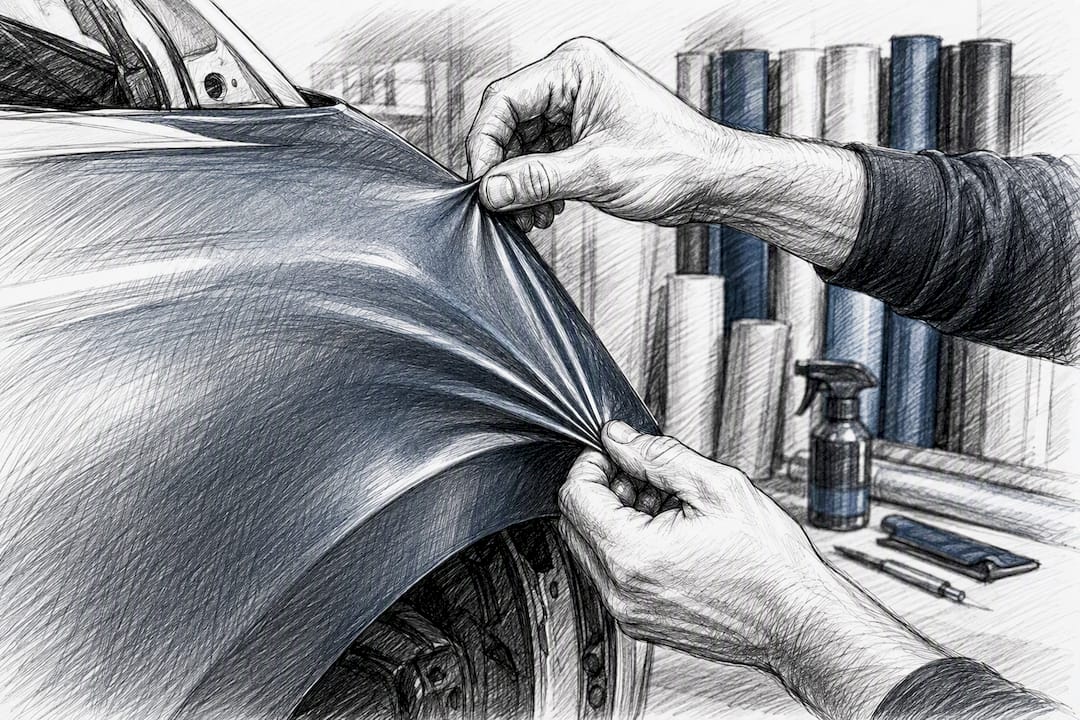
Kelley Blue Book places full-wrap costs as high as $10,000 for premium finishes on larger vehicles, and notes wraps won't disguise dents or deep scratches underneath. Commercial van and box-truck pricing tends to run higher than passenger vehicles because of flat panel area and extra prep work.
Most quotes in this range include:
- Material and printing costs for the design you approve
- Installer labor for application and trimming
- A basic warranty on materials (terms vary by shop)
What's frequently excluded unless you ask: door jamb wrapping, chrome delete, removal of an old wrap, and paint correction before install.
How Do Size and Body Shape Affect the Price?
Square footage sets the baseline, but body complexity is what actually pads the labor line on your invoice. A sedan's wrappable surface area sits around 250 to 300 square feet. An SUV or crew-cab pickup climbs to 350 to 450 square feet. A cargo van can hit 500 to 600 square feet, and a box truck's flat sides push total coverage well past that, even though the panels themselves are easier to wrap than a car's curves.
Curves, seams, and mirrors are where labor hours really pile up:
- Bumper contours and wheel wells require heat-stretching and extra trim time
- Door handles, gas caps, and side mirrors each add small but real labor minutes
- Multi-panel seams (like around a truck bed) need precise alignment to avoid visible mismatches
- Roof rails, running boards, and side steps often get quoted as separate add-ons
The dollar gap between classes reflects both material volume and labor complexity. Moving from a sedan to a full-size van commonly adds $1,000 to $3,000 to the total bid, and a box truck's simpler shape can partially offset its larger area, but only if the design uses fewer complex cutouts around lights and vents.
What Actually Drives the Price on Your Quote?
A wrap quote is really five separate line items stacked together, and understanding each one is how you catch an inflated bid before you sign it.
- Material grade. Economy calendered vinyl costs the least; premium cast films and specialty finishes cost considerably more and often need more install time, according to WrapSize's pricing model.
- Regional labor rates. Installer hourly rates commonly range from $65 to $150 or more depending on your metro area and the shop's skill level.
- Surface prep. Removing an old wrap, correcting paint defects, or degreasing heavily oxidized panels adds hours before the new film ever touches the car.
- Design and print complexity. A simple color-change wrap prints faster than a photo-realistic graphic wrap with gradients and fine text.
- Add-ons. Door jambs, chrome delete, and intricate trim pieces add finish time and materials that many shops quote separately.
Pro Tip: Ask your installer to break the quote into materials, labor hours, and add-ons as three separate numbers. If a shop doesn't itemize, that's usually a sign the bid is padded somewhere.
What Do Different Wrap Materials Cost and How Long Do They Last?
Film choice is the single biggest lever you control on both price and how many years the wrap actually survives outdoors.
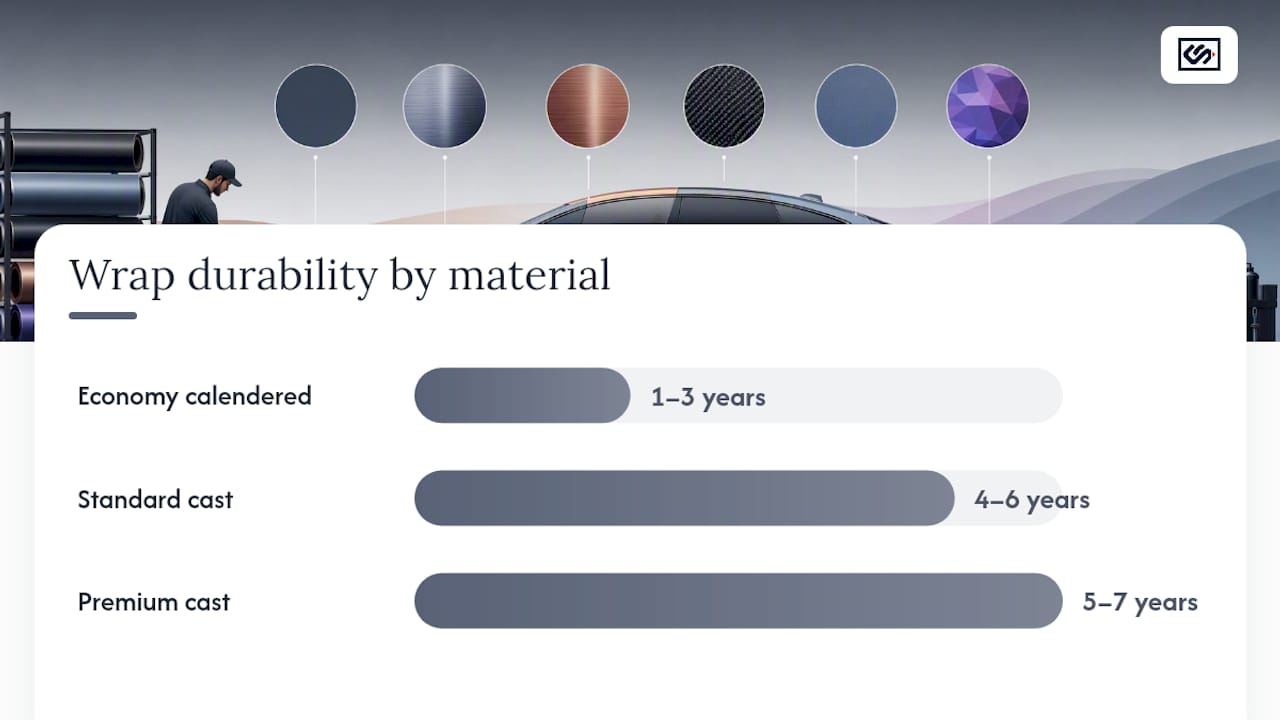
- Economy calendered vinyl: Cheapest option, typically lasting 1 to 3 years before fading or cracking, best for short-term promotions.
- Standard cast vinyl: A common mid-range choice with better conformability, generally holding up 4 to 6 years.
- Premium cast vinyl (3M, Avery-grade films): Higher cost but tighter color consistency and improved UV resistance, often rated for 5 to 7 years.
- Specialty films (chrome, color-shift, textured): Cost considerably more because they demand more installer skill and longer application time, and they can carry shorter effective lifespans than standard cast films.
- Paint protection film (PPF): Not a graphics product, but often compared for cost. PPF runs higher upfront and is used for protection rather than branding.
By the numbers: Material type is the largest single cost factor in a wrap quote, and the price gap between economy calendered film and premium cast vinyl can more than double the material line item alone, per WrapSize's cost breakdown.
Warranty terms usually track film class. Economy vinyl might carry a one-year materials warranty, while premium cast films often come with three to five years of manufacturer backing, assuming the shop is a certified installer for that brand.
Is DIY Wrapping Actually Cheaper Than Hiring a Pro?
DIY materials for a sedan commonly start around $300 to $1,000 for film and basic tools, but that number hides the real cost: time and skill. Expect 20 to 40 hours for a first attempt, spread across a weekend or two, with real risk of bubbles, seams, and stretched graphics on curved panels.
Professional installation typically includes:
- Surface cleaning and prep before any film touches the car
- Heat-gun stretching around bumpers, mirrors, and door handles
- A materials and labor warranty, often one to five years depending on film class
- A finished result inside a predictable one to three day turnaround
Pro Tip: DIY makes sense for a small partial wrap, a hood decal, or a temporary event vehicle where a few visible seams won't matter. For a full commercial wrap that represents your brand daily, the labor savings rarely justify the risk of a redo.
If your business image depends on the result, professional install is the safer bet almost every time.
How Do You Get Comparable Quotes From Different Shops?
Getting three quotes that actually mean something requires giving every shop the same information and asking for the same line items back.
Send each shop:
- Exact make, model, and year of your vehicle
- Clear photos from all four sides, plus close-ups of any dents, rust, or prior wrap damage
- Your design file or a description of the look you want (full color change vs. partial branding)
- Your timeline and whether the vehicle needs to stay drivable during install
Insist that every quote itemizes:
- Material brand and grade being used
- Estimated installed labor hours
- Removal cost if an old wrap or heavy oxidation is present
- Warranty length and what it actually covers
- Turnaround time in business days
Ask installers directly for photos of past work and references. A shop that hesitates to show its own portfolio, or quotes a price dramatically below competitors without explaining the film grade, is a red flag worth walking away from. Shops typically quote by vehicle or panel rather than strict square footage, so requesting a materials-versus-labor breakdown is what actually makes bids comparable.
How Long Does a Wrap Last and What Does Removal Cost?
Lifespan depends almost entirely on film class and how much direct sun the vehicle sees. Economy calendered vinyl holds up 1 to 3 years outdoors; standard cast films run 4 to 6 years; premium cast vinyl can reach 5 to 7 years with consistent care.
Routine upkeep is modest:
- Hand wash with a pH-neutral soap rather than automatic brush washes
- Avoid parking under direct sun for extended stretches when possible
- Address edge lifting quickly before moisture gets underneath
The numbers to budget for: Professional removal typically costs $300 to $1,000, and that figure climbs when the film is old or the adhesive has baked onto the paint over multiple summers. Budgeting removal into your total ownership cost, not just the install price, is what separates a realistic wrap budget from a surprised one.
Why We Think of Vehicle Wraps as Rolling Storefronts
Crispsign built its business on the idea that visibility sells, whether that's a channel-letter sign above a storefront or a wrap on a service van parked outside a customer's house. The same production discipline that lets us turn around a custom cabinet sign or lobby logo quickly applies just as directly to vehicle graphics: design coordination, accurate fabrication, and a workflow built to avoid the delays that plague smaller sign shops.
What we've learned working with small business owners is that the biggest wrap regret isn't price. It's mismatched expectations. Owners who skip the itemized quote step almost always end up surprised by an add-on fee for door jambs or chrome delete they never budgeted for. A wrap that lasts five years at a fair price beats a cheap wrap that fades in eighteen months and needs a costly redo before it's paid for itself in brand exposure.
— Nick
Ready for a Vehicle Wrap Quote That Won't Surprise You?
If you're weighing partial wraps against a full vehicle transformation, Crispsign gives you a single point of contact for design, fabrication, and coordinated installation instead of juggling a separate designer and installer. You get the same production discipline we apply to storefront signage: clear specs, real turnaround estimates, and a quote that itemizes material, labor, and add-ons upfront so there's no guessing on the invoice.
A typical Crispsign vehicle graphics quote covers design coordination based on your brand assets, fabrication to your exact vehicle specs, and optional installation coordination through a vetted local installer, plus clear warranty terms on materials. Turnaround runs faster than most local shops because production is built around efficiency, not backlog.
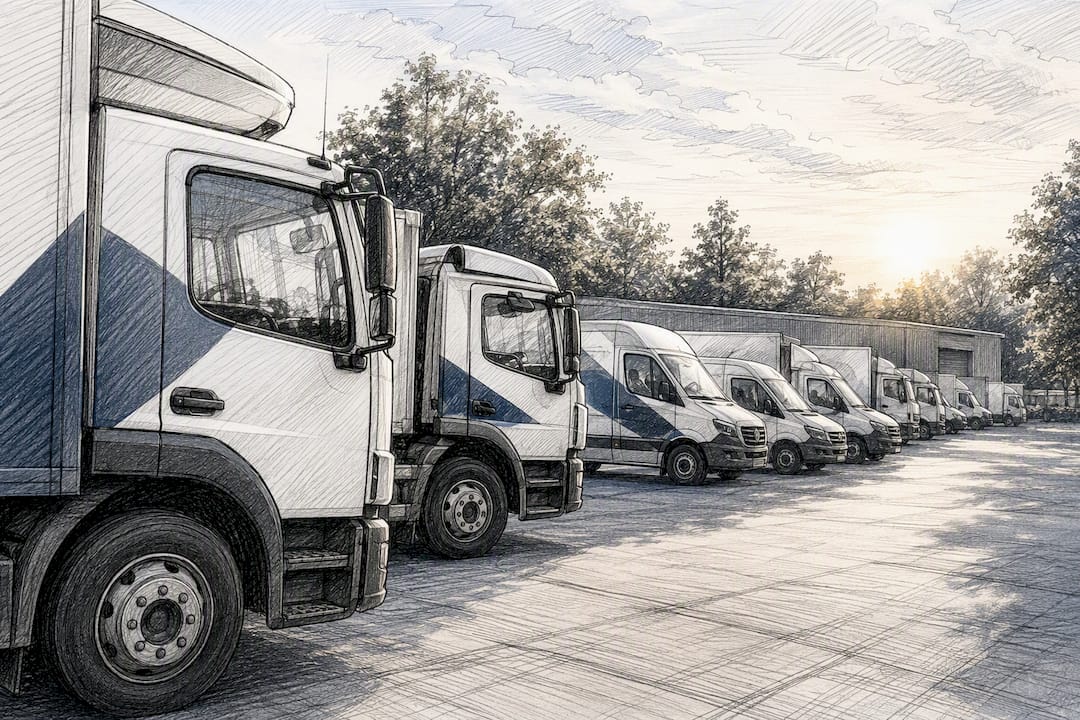
For business owners managing more than one vehicle, the math changes fast. If you're pricing out a fleet or multi-location rollout, visit the Crispsign corporate portal to get coordinated quotes across every vehicle in one place instead of chasing separate bids shop by shop.
Sources
For a precise number before you pick up the phone, run your vehicle through the WrapSize pricing calculator, which models area, coverage, and labor rate together. Cross-check sedan and SUV ranges against Kelley Blue Book's cost breakdown, and if you drive a commercial van or box truck, Wraptor's commercial pricing guide reflects that market more accurately than passenger-car averages.
- How Much Does It Cost to Wrap a Car? - Kelley Blue Book
- Vehicle Wrap Pricing Calculator | Cost, Labor & Material Estimate | WrapSize
- Box Truck & Cargo Van Wrap Cost: 2026 Commercial Pricing | Wraptor Blog
- Vehicle Wrap Pricing: Real Costs, calculator and Price Factors
FAQ
Is It Cheaper to Wrap a Car Than to Paint It?
In most cases, yes. A quality wrap generally costs less than a professional repaint of comparable quality, and it can be removed later without the permanence of paint, though ultra-premium paint jobs can sometimes rival high-end wrap pricing.
How Long Will a Car Wrap Last?
Expect 1 to 3 years from economy calendered vinyl, 4 to 6 years from standard cast vinyl, and up to 5 to 7 years from premium cast films, depending on sun exposure and care.
Which Is Better, PPF or a Wrap?
They solve different problems: paint protection film (PPF) guards paint from chips and scratches, while a vinyl wrap changes color or adds branding. Many owners use PPF on high-impact areas and a wrap for the rest of the vehicle.
Can I Wash a Wrapped Vehicle?
Yes, but hand wash with a pH-neutral soap and avoid automatic brush washes, which can lift edges and dull the finish over time.
How Much Should I Budget for Removal Later?
Plan for roughly $300 to $1,000 for professional removal, with the higher end reserved for older wraps where the adhesive has baked onto the paint.