Vehicle Wrap Lifespan: What Owners and Fleets Should Know
A well-installed vehicle wrap lasts 5 to 7 years under normal conditions, and premium cast vinyl on a garage-kept car can stretch to 8 or even 10 years. Where your wrap actually falls in that window comes down to three things, in order of importance: the film type (cast vinyl outperforms calendered vinyl by a wide margin), the installer's skill and surface prep, and how much sun, salt, and abrasion the vehicle sees day to day.
Get all three right and you're looking at the long end of that range. Get any one of them wrong and you can cut your wrap's life in half.
- Premium cast vinyl, garage-kept: 7–10 years
- Commercial cast vinyl, daily driver: 5–7 years
- Calendered/economy film: 1–4 years
- Chrome or color-shift specialty finishes: 1–3 years
Quick stat: Extreme UV and heat exposure alone can shave 2–3 years off a premium wrap's expected life, which is why a Phoenix fleet vehicle and a Seattle daily driver wrapped in identical film rarely age the same way.
Key Takeaways
Vehicle wrap lifespan depends primarily on film type, installer quality, and climate exposure, and following a maintenance routine can push a premium wrap toward the top of its 5 to 10 year range.
| Point | Details |
|---|---|
| Choose cast over calendered | Cast vinyl resists shrinking and edge lift far better, typically doubling the lifespan of calendered film. |
| Vet your installer thoroughly | Ask for before-and-after photos, written warranty terms, and details on their surface prep process. |
| Follow a consistent wash routine | Hand-wash weekly with pH-neutral soap and the two-bucket method to avoid mechanical abrasion. |
| Inspect edges and seams monthly | Catching lifted edges early turns a five-minute fix into a saved panel replacement later. |
| Avoid common traps | Skip automatic brush washes, unusually cheap quotes, and same-day promises on complex wrap jobs. |
| Work with a consistent fabricator | Crispsign builds vehicle wraps and graphics online with nationwide fabrication to installation-ready standards. |
Table of Contents
- How Long Does a Vehicle Wrap Last by Film Type?
- What Factors Actually Shorten Wrap Life?
- How Should You Wash and Maintain a Wrapped Car?
- When Do You Repair vs. Replace a Vehicle Wrap?
- Which Vinyl and Finish Lasts Longest?
- What Should You Check Before Hiring a Wrap Installer?
- How Do Cost and Warranty Length Relate to Lifespan?
- What Installation Standards Actually Prevent Early Failure?
- Is a Wrap the Right Choice for Your Vehicle?
- Get a Vehicle Wrap Built to Go the Distance
- Sources
- FAQ
How Long Does a Vehicle Wrap Last by Film Type?
The honest answer depends entirely on what film went on your vehicle and where that vehicle spends its life. Vinyl wraps aren't a single product category. They're a spectrum, and the gap between the top and bottom of that spectrum is bigger than most people expect walking into a shop for the first time.
Cast vinyl is manufactured by pouring liquid vinyl onto a casting sheet and letting it cure, which produces a thinner, more flexible film that conforms to curves without much memory or shrinkage. Calendered vinyl gets squeezed through heated rollers instead, which is cheaper to produce but leaves the material with more internal stress. That stress is exactly why calendered wraps tend to shrink, lift at edges, and crack sooner.
| Film Type | Expected Lifespan | Best Use Case | Cost Signal |
|---|---|---|---|
| Premium cast vinyl | 7–10 years | Full color-change, complex curves, garaged vehicles | Highest |
| Commercial cast vinyl | 5–7 years | Fleet branding, daily-driver color changes | Mid to high |
| Calendered/economy film | 1–4 years | Short-term promotions, budget-limited jobs | Lowest |
| Chrome/color-shift specialty | 1–3 years | Show cars, accent panels, statement finishes | Highest per square foot |
Ideal conditions push every one of these bands upward. A car that lives in a garage, gets hand-washed, and rarely sees direct midday sun can outperform its film's typical lifespan by a year or two. Extreme climates do the opposite: desert UV, coastal salt air, or harsh winter road chemicals routinely pull wraps toward the short end of their range.
- Coastal vehicles face accelerated edge lift from salt air corrosion under seams.
- Desert and high-altitude vehicles face UV-driven fading and brittleness years earlier than average.
- Cold-climate vehicles face road salt buildup that eats into adhesive bonds at panel gaps.
What Factors Actually Shorten Wrap Life?
Most premature wrap failures trace back to a handful of repeat offenders, and almost none of them are mysterious once you know what to look for.
UV and heat break down the vinyl's plasticizers over time, which is what causes fading, brittleness, and eventual cracking. A hood or roof panel, which takes the most direct sun exposure, will almost always show wear before the doors or lower panels do.
Road salt and winter chemicals work their way into seams and edges, weakening adhesive bonds from the inside out. This is a slow process, but it's relentless in states that salt roads heavily every winter.
Coastal salt air does something similar even without direct road exposure. Salt-laden humidity settles into every crevice on the vehicle, including wrap edges, and accelerates the same lifting process you'd see from winter road treatment.
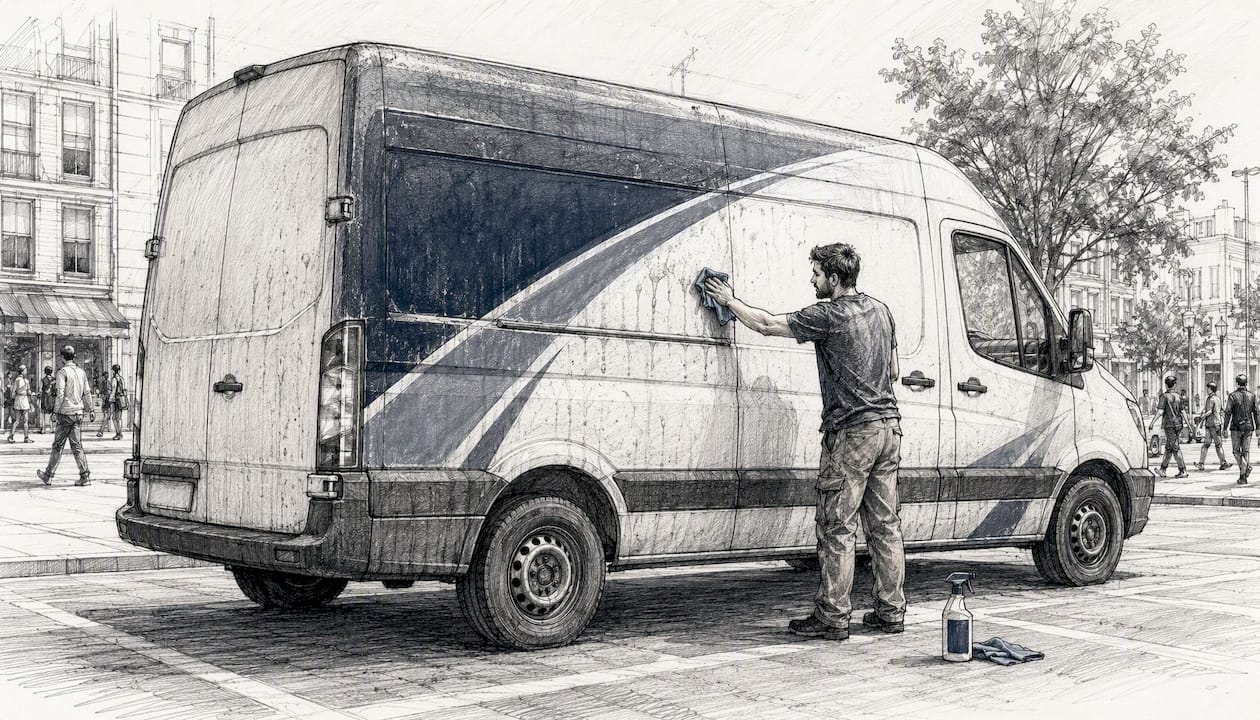
Mechanical abrasion is the factor most owners underestimate. Automatic car wash brushes drag grit across the film surface repeatedly, creating micro-scratches that dull the finish and eventually expose edges to lifting. Pressure washers held too close, or aimed directly at seams and edges, can force water underneath the film and start delamination from the inside.
Vehicle usage patterns matter more than people assume. A fleet vehicle covering 40,000 miles a year and getting washed weekly at a commercial wash will show wear far sooner than a personal vehicle driven 8,000 miles a year and hand-washed monthly.
Storage and parking habits round out the list. A car parked outdoors year-round ages differently than one kept in a garage, even with identical mileage and film.
Beyond exposure, a surprising share of early failures start at installation, not on the road. Poor surface prep, trapped dust under the film, and sloppy edge sealing are recurring causes that installer-focused write-ups return to again and again when explaining why two identical wraps age so differently.
Pro Tip: Run your fingernail gently along every seam and edge about two weeks after installation. Any spot that catches or feels slightly raised is worth flagging to your installer immediately, since edge lift caught early is a five-minute fix and edge lift ignored for months is often a full panel replacement.
How Should You Wash and Maintain a Wrapped Car?
The gap between a wrap that hits 4 years and one that hits 8 usually comes down to a maintenance routine, not luck. Here's the routine that gets you to the upper end of the range:
- Wash weekly to biweekly by hand, using the two-bucket method: one bucket of clean water and soap, one bucket of plain rinse water for your wash mitt, so you're not dragging dirt back across the film.
- Use a pH-neutral, wrap-safe soap instead of standard automotive shampoo, since many general-purpose soaps contain solvents that can dull vinyl over time.
- Dry with a microfiber towel or air, never a chamois or rough cloth that can introduce fine scratches.
- Inspect edges and seams monthly, paying particular attention to door jambs, mirror bases, and bumper transitions where lifting starts first.
- Reapply a wrap-safe sealant or ceramic coating every 6 to 12 months, which can add roughly 1 to 2 years to a premium wrap's usable life by boosting UV and chemical resistance.
On the do-and-don't list: skip traditional carnauba wax on matte and satin finishes, since it can leave a glossy sheen that ruins the intended look. Skip automatic brush washes entirely. Do use touchless or hand washes, and do apply a wrap-rated ceramic coating if you want real protection rather than cosmetic shine.
Bird droppings, tree sap, and bug splatter are acidic and need attention fast. Wipe them off within a day or two with a wrap-safe cleaner, because letting them sit for a week in direct sun can etch a permanent shadow into the film that no amount of washing will remove afterward.
Pro Tip: Keep a wrap-safe wipe pack in your glovebox. It takes thirty seconds to deal with fresh sap or droppings, and thirty seconds now beats a $200 panel repair later.
When Do You Repair vs. Replace a Vehicle Wrap?
Not every flaw means it's time for a full rewrap. Knowing which signs call for a quick fix and which signal the end of the wrap's usable life saves owners and fleet managers real money.
- Edge lift at panel seams, door jambs, or bumper transitions is usually an easy spot repair if caught early.
- Seam failure, where two panels of film separate visibly, often needs professional reapplication rather than a DIY fix.
- Cracking, especially across high-exposure panels like the hood or roof, signals the vinyl has lost flexibility and is nearing the end of its service life.
- Color fade, particularly uneven fading between sun-exposed and shaded panels, is a cosmetic issue that can sometimes be patched but rarely matched perfectly.
- Delamination, where the film separates from the adhesive layer in bubbles or wrinkles, typically means water or air got underneath and it will spread.
- Adhesive staining left behind after partial peeling is a sign the film has been failing for a while, not something that just started.
Inspect the usual trouble spots first: door edges, mirror housings, hood seams, and the roofline. Fleet trucks should also get a look at the lower rocker panels and rear bumper, where road debris and undercarriage spray do the most damage.
A single lifted edge or a small bubble is worth a spot repair. Widespread cracking across multiple panels, seam failure in several locations, or delamination that's spreading rather than isolated is usually the signal that a full removal and rewrap will cost less over time than a string of patch jobs.
Which Vinyl and Finish Lasts Longest?
Cast vinyl wins on longevity because of how it's made. The casting process produces a thin, dimensionally stable film with minimal internal stress, so it conforms tightly to curves, mirrors, and door handles without shrinking back or lifting at the edges months later. Calendered vinyl, made by rolling rather than casting, holds more internal tension. That tension is what eventually pulls edges up and causes premature cracking, even on a flat panel.
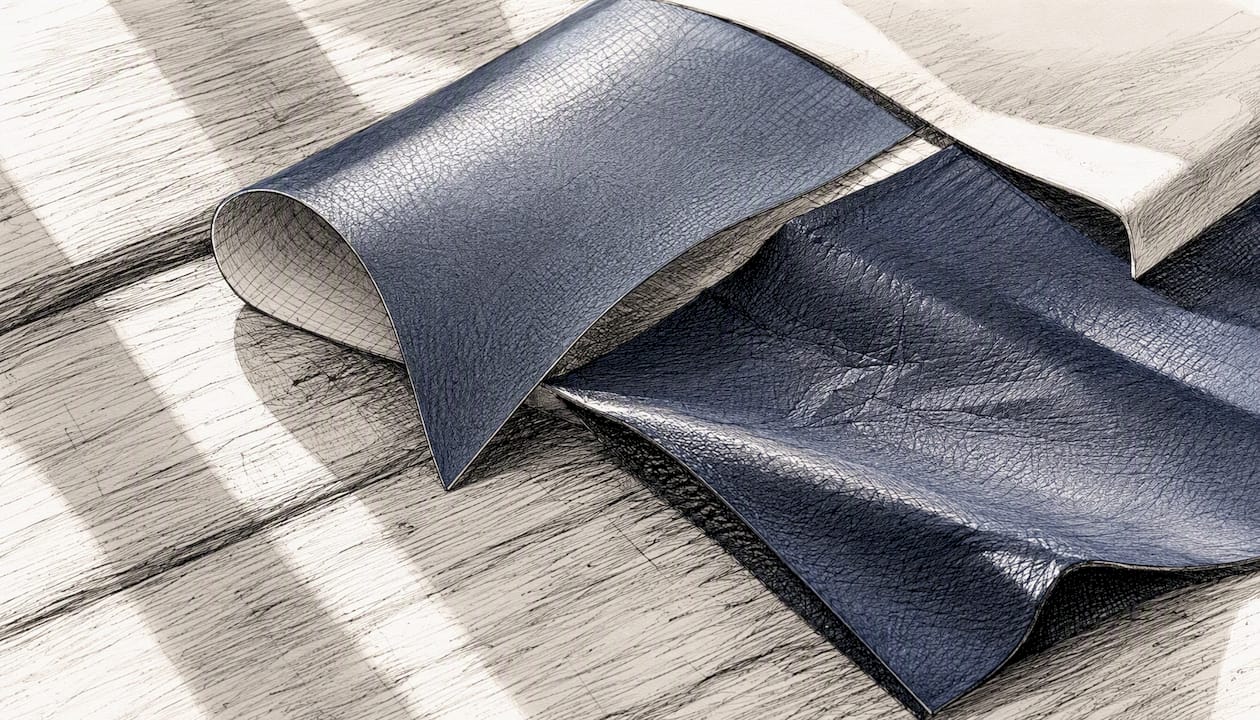
Finish choice adds another layer of trade-offs. Gloss finishes tend to be the most forgiving and easiest to maintain, commonly reaching the 5 to 7 year range with standard care. Matte and satin finishes look sharp but are more sensitive to fingerprints, oils, and improper waxing, and often land closer to 3 to 5 years unless maintenance is dialed in. Chrome and color-shift finishes deliver the most dramatic look but are the most fragile, frequently needing replacement within 1 to 3 years.
| Attribute | Cast Vinyl | Calendered Vinyl | Chrome/Specialty |
|---|---|---|---|
| UV resistance | High | Moderate | Low to moderate |
| Edge behavior | Stable, minimal lift | Prone to shrink and lift | Highly sensitive to edges |
| Conformability | Excellent on curves | Poor on complex curves | Moderate, requires expert install |
| Typical lifespan band | 5–10 years | 1–4 years | 1–3 years |
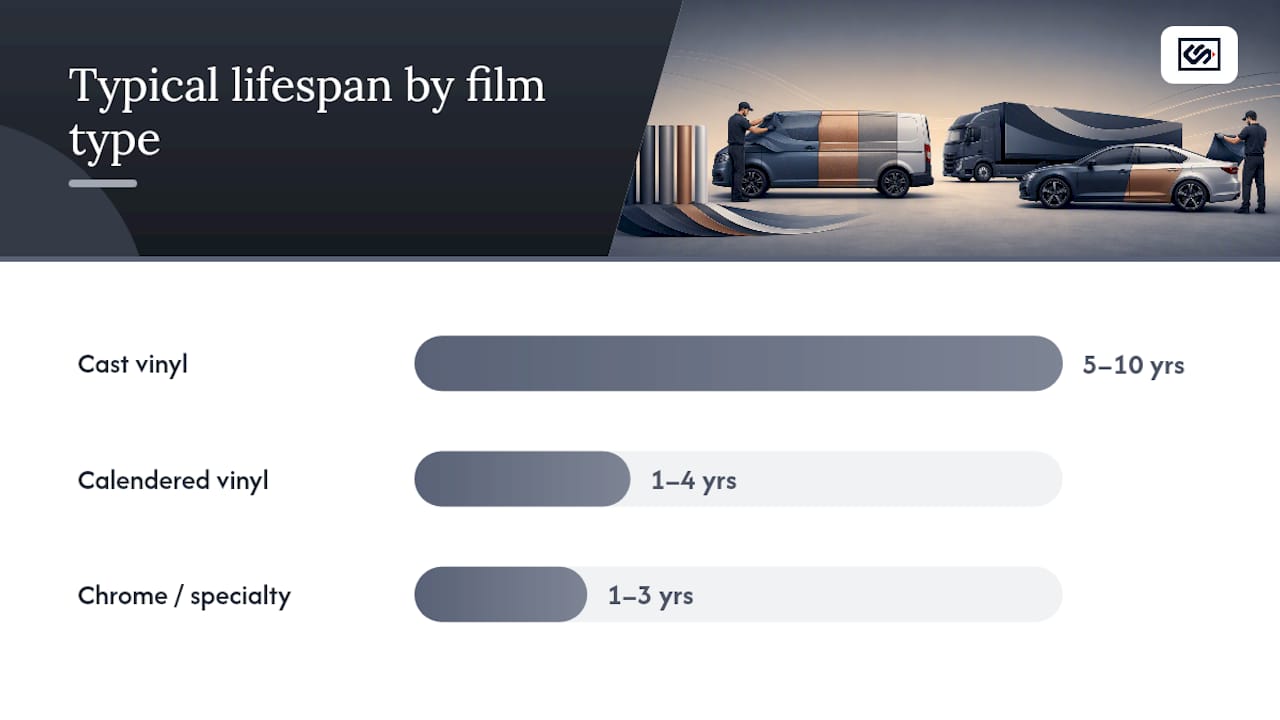
If you're weighing this decision for a fleet rebrand or a personal color change, the right call usually isn't the cheapest film per square foot. It's the film that matches how long you actually plan to keep that look on the vehicle.
What Should You Check Before Hiring a Wrap Installer?
Installer skill isn't a minor variable in wrap lifespan. It's arguably the biggest one. A premium cast film installed by someone who rushes the prep work will fail sooner than a mid-tier film installed by someone who takes surface prep seriously, and that gap shows up consistently across shop guides written by people who've seen both outcomes firsthand.
The steps that matter most happen before the film ever touches the car:
- Paint decontamination removes wax, silicone, and embedded contaminants that would otherwise prevent proper adhesion.
- Surface inspection catches existing paint chips, rust spots, or body filler that need addressing before wrapping, since a wrap will telegraph and eventually lift over those flaws.
- Temperature-controlled application matters because vinyl behaves differently in a 55 degree bay versus a 90 degree one, and skilled installers adjust technique accordingly.
- Edge finishing and post-heating lock the film's edges down and relieve stress, which is exactly where most premature failures start if skipped.
Before signing off on a quote, ask these questions:
- Can you show before-and-after photos of past jobs on a similar vehicle body style?
- What's the manufacturer warranty on the film, and what's your own labor warranty on top of it?
- What does your shop environment look like, and is it climate-controlled and dust-managed?
- Do you decontaminate and inspect paint before wrapping, and how do you document existing damage?
Watch for two red flags in particular. A same-day promise on a full wrap for a vehicle with complex curves is often a sign that prep and post-heating are getting rushed. And a quote that lands far below every other local shop's estimate can mean the installer is quietly substituting calendered film for cast, since that swap is one of the easiest ways to cut cost without the customer noticing until the wrap starts failing a year or two in.
How Do Cost and Warranty Length Relate to Lifespan?
Price and warranty terms are two of the clearest signals you'll get about how long a wrap is actually built to last, if you know how to read them.
Full wrap pricing typically reflects labor, the film itself, and any add-ons like overlaminate or ceramic coating. Premium cast film with professional installation sits at the top of the price range, and that premium usually buys you the 7 to 10 year lifespan band rather than the 1 to 4 year calendered range. Overlaminate and ceramic coating add cost upfront but extend service life by improving scratch and UV resistance.
Warranty language deserves a careful read, not a skim. Manufacturers like 3M and Avery Dennison often draw a distinction between vertical and horizontal surface warranties, because horizontal panels like hoods and roofs take more direct UV exposure and typically carry shorter coverage than vertical panels like doors and fenders. A warranty that doesn't specify this distinction is worth asking about directly.
Quick stat: A 3 to 4 year warranty generally lines up with commercial cast film, while warranties stretching toward 5 years or more usually indicate premium cast film and stronger installer confidence in their own prep work.
Red flags worth walking away from:
- No written warranty at all, only a verbal promise.
- Vague coverage language that doesn't distinguish film defects from installation errors.
- A warranty period that seems disconnected from the film type being quoted (a "lifetime" claim on calendered vinyl, for instance).
What Installation Standards Actually Prevent Early Failure?
Process is what separates a wrap that hits its full potential from one that disappoints an owner within a year. Shop environment, film handling, and quality checks aren't marketing language. They're the mechanical reasons one installation outlasts another using identical film.
A controlled shop environment matters because dust and debris trapped under film during application create tiny air pockets that expand and lift over time. Proper film storage matters too, since vinyl left in a hot or humid stockroom can degrade before it's even applied. Quality checks after installation, including a full edge and seam inspection before the vehicle leaves the shop, catch problems while they're still a five-minute fix rather than a customer complaint six months later.
Crispsign builds vehicle branding graphics, including full wraps, cut-vinyl decals, and removable magnets, through an online design process paired with nationwide fabrication and optional coordinated professional installation. That structure exists specifically to keep production standards consistent regardless of which shop ends up handling the physical install.
For fleet managers specifically, an annual edge inspection across every vehicle in the fleet is one of the simplest habits that pays for itself. Catching lifted edges once a year, rather than waiting for a driver to mention it, keeps small issues from turning into full-panel replacements.
Pro Tip: If you manage more than five wrapped vehicles, put edge inspection on a calendar rather than leaving it to chance. A ten-minute walk-around per vehicle, once a year, catches most problems before they become expensive.
Is a Wrap the Right Choice for Your Vehicle?
Wraps make the most sense when reversibility and design flexibility matter more than raw permanence. A wrap protects the factory paint underneath it, so if you're leasing a vehicle or planning to sell within a few years, wrapping rather than painting preserves resale value while still delivering a full color change or brand presence.
Paint or a permanent finish makes more sense when you know you're keeping the vehicle indefinitely and want to avoid any recurring maintenance conversation. Decals sit in between: less commitment than a full wrap, lower cost, and often the right call for a single logo or contact information rather than a full color change.
For personal vehicle owners, the calculus usually favors premium cast film if you plan to keep the car more than three years, since the cost per year of ownership drops fast once you're past the break-even point against cheaper film. For fleet managers, build the replacement cadence into your budget from day one rather than treating it as a surprise. A wrap that's expected to last 3 to 4 years on a high-mileage delivery vehicle isn't failing early. It's aging exactly as expected for that use case.
Get a Vehicle Wrap Built to Go the Distance
Everything in this guide points to the same conclusion: film quality and installation process are the two levers you control, and they're the ones that determine whether your wrap hits year 3 or year 9. Crispsign gives you a way to lock in the first lever with online design tools and nationwide fabrication built to installation-ready standards, so the film that shows up at your installer's shop is already consistent with what you specified.
If you're planning a fleet rebrand, a full color-change project, or want a specialty finish like chrome or a color-shift wrap, Crispsign's vehicle branding graphics cover the design and fabrication side while coordinating optional professional installation so you're not left matching a shop to your specs on your own. Start by designing your vehicle wrap graphics online and get a clear look at your options before committing to a full project.
Sources
Readers who want to dig into manufacturer specifics or compare shop-level analysis can start with these resources.
- How Long Does a Vehicle Wrap Last? (And What Kills It Early) | Wraptor Blog
- How Long Does a Vehicle Wrap Really Last on a Car?
- How Long Does a Car Wrap Last? (Honest Answer for 2026)
- Thehowmuch
FAQ
How long do most car wraps last?
Most professionally installed wraps using quality cast vinyl last 5 to 7 years, with premium cast film on a garage-kept vehicle sometimes reaching 8 to 10 years. Calendered or economy film typically lasts only 1 to 4 years.
Is there a downside to wrapping a car?
Wraps generally last fewer years than a quality paint job and require more careful washing to avoid mechanical damage, but they protect the factory paint underneath and are fully reversible, which paint is not.
Can a wrapped car go through a car wash?
Touchless or hand washes are safe for a wrapped car, but automatic washes with spinning brushes should be avoided since the bristles create micro-scratches and can catch and lift film edges over time.
How much does it cost to wrap a car?
Cost depends heavily on film type and vehicle size, with premium cast film and professional installation commanding a higher price than calendered film, though that premium typically buys several additional years of service life.
What are the earliest signs a wrap is failing?
Edge lift at seams, door jambs, and mirror housings is usually the first visible sign, followed by cracking on high-exposure panels like the hood and roof and eventually color fade in sun-heavy spots.