Demand These 3 Documents Before Wall Mural Installation for SMBs
For commercial, multi-panel, or high-visibility murals, professional installation is the safer bet. Alignment mistakes and adhesion failures on a lobby wall cost far more to fix than they would have cost to prevent. A small, single-panel graphic in a low-traffic hallway is fair game for a confident do-it-yourselfer. Anything bigger, more visible, or more permanent deserves a site survey before anyone unrolls a panel.
TL;DR:
- Large murals spanning over eight feet or involving multiple panels should always involve a professional site survey to prevent alignment, adhesion, and safety issues.
- Commercial murals in high-visibility areas require specialized tools, planning, and adherence to building codes, making DIY installation risky and potentially costly.
- Polymeric vinyl is the preferred material for long-term, smooth drywall commercial murals, while textured surfaces often need fabric coverings for proper adhesion.
- Installation typically takes 4 to 8 hours for a single wall and several days for complex, multi-wall projects with remediation needs; proper preparation reduces delays.
- Before signing a contract, businesses should ensure documentation of adhesion tests, fire certificates, and detailed quotes to avoid common post-installation disputes.
Table of Contents
- What Determines Whether You Need Professional Wall Mural Installation?
- Which Wall Mural Materials Work Best for Commercial Spaces?
- What Does a Professional Site Survey Check Before Installation?
- What Happens During Wall Mural Installation Day?
- How Much Does Wall Mural Installation Cost and How Long Does It Take?
- How Long Do Wall Murals Last and How Do You Remove Them?
- A Buyer's Checklist Before You Sign an Installation Contract
- How CrispSign Handles Wall Mural Installation for Growing Businesses
- Sources
- FAQ
What Determines Whether You Need Professional Wall Mural Installation?
The size and visibility of the job decides who should hang it. A single 4-foot panel behind a reception desk is forgiving. A 20-foot, six-panel lobby wrap that greets every customer who walks through your door is not.
Large, multi-panel commercial murals demand specialized tools: laser levels for true alignment, industrial sealants for seam integrity, and lifts or scaffolding when the mural climbs past arm's reach. Skip any of those, and you risk the two most common DIY failures: visibly crooked panels and seams that lift within weeks. Professional installers treat these projects as engineering work, not decoration, running substrate tests and adhesion checks before a single sheet goes up, according to installation guidance from Linemark.
Here's the practical dividing line for small and medium-sized businesses:
- DIY-acceptable: one panel, under roughly 6 feet wide, on smooth drywall, in a spot where a slight imperfection won't hurt your brand.
- Hire a pro: anything spanning multiple panels, anything above 8 feet where a lift is involved, or anything in a customer-facing space where seams and alignment are the first thing visitors notice.
If you're unsure which category your project falls into, a quick site survey answers the question faster than guessing.
Which Wall Mural Materials Work Best for Commercial Spaces?
Material choice determines how long your mural looks sharp and how much risk you carry on installation day. Three categories dominate commercial jobs, and each fits a different scenario.
- Polymeric or cast vinyl: the standard for flat drywall and long-term installations, offering strong adhesion and a smooth finished look for lobbies and retail walls.
- Fabric wall coverings: better suited to textured wall graphics or acoustic panels, since fabric flexes over irregular surfaces where rigid vinyl would bubble or telegraph texture.
- Rigid panels (acrylic or PVC): ideal when you want a mural that can be removed and reinstalled at a new location, common for franchise buildouts and temporary storefronts.
Fire rating is not a single-material decision. The whole system, meaning the film, the adhesive, and any laminate layer together, has to pass the standard your local code requires, since a compliant vinyl can still fail if it's paired with the wrong laminate.
Surface compatibility matters just as much as the material itself. Smooth drywall accepts nearly any vinyl without complaint, but textured surfaces, brick, or masonry can cause visible telegraphing or adhesion gaps unless you choose a material rated for that texture, per Avery Dennison's interior wall graphics bulletin. Before committing to full production, request an adhesion test on your actual wall. It's a small delay that prevents a much bigger one.
What Does a Professional Site Survey Check Before Installation?
A site survey exists to catch problems before they become install-day emergencies. Skipping it is the single most common reason commercial mural projects run over budget or over schedule.
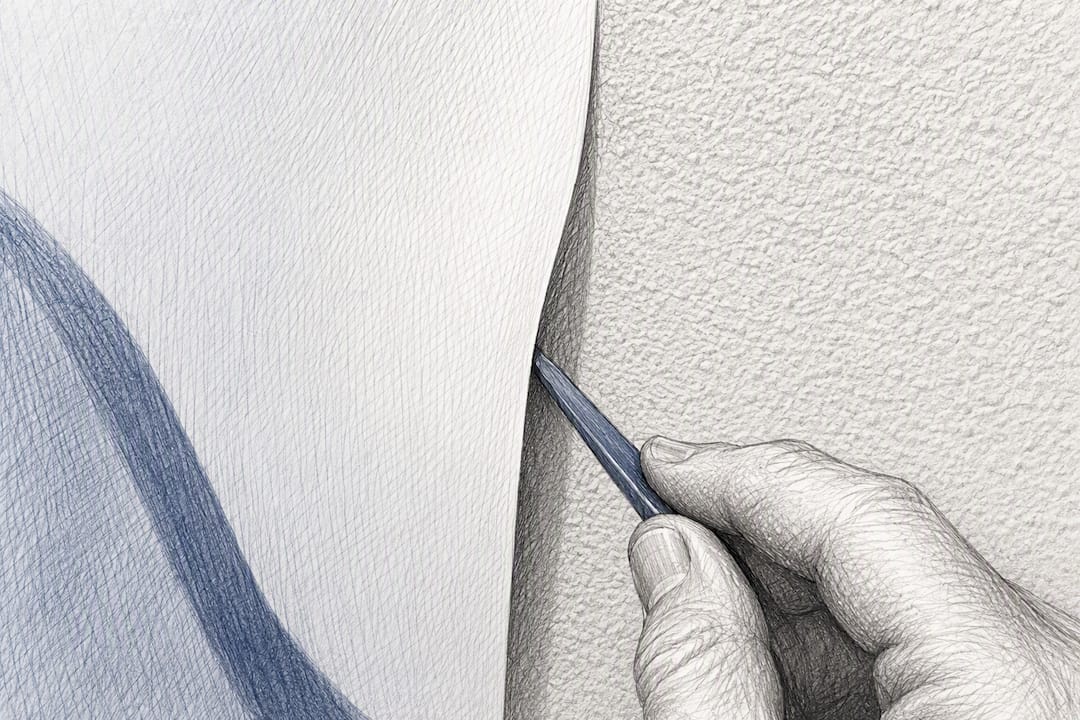
- Wall measurements and plumb check. Installers use laser alignment tools to find out-of-plumb walls, which affects how panels are cut and registered.
- Moisture readings. Damp drywall or masonry will not hold adhesive, regardless of how good the material is.
- Paint cure status. Fresh paint needs sufficient time to fully cure before vinyl can bond properly, according to installer readiness guidance from Teamwork.
- Fixtures and obstructions. Outlets, light switches, and HVAC vents all need to be mapped so panels are cut around them, not over them.
- Access and safety requirements. A ceiling mural or an atrium wall may require a lift or scaffolding, which adds both cost and scheduling lead time.
Pro Tip: Ask every installer bidding on your project for three documents before you sign: a written adhesion test result, the material's fire certificate, and signed site-survey notes. If a vendor hesitates to provide any of the three, treat that as your answer.
Coordinating measurements and wall condition checks between your designer, printer, and installer is exactly the kind of pre-installation planning that commercial installation teams build into every project timeline.
What Happens During Wall Mural Installation Day?
Installation day runs on sequence and preparation, not improvisation. Here's the order a professional crew follows on a typical commercial job.
Before anything touches the wall:
- Floor protection goes down first, followed by adjusted lighting so installers can see seams and bubbles clearly.
- HVAC gets stabilized, since temperature swings during application cause adhesive to behave unpredictably.
- The wall gets wiped down with isopropyl alcohol to remove dust, oils, and residue that would otherwise sit under the vinyl and cause bubbling later, a step readiness guides flag as one of the most skipped and most costly steps in DIY jobs.
Positioning and application:
Panels get dry-positioned first, meaning they're held or lightly tacked in place without adhesive activation, so the crew can confirm registration and alignment before committing. For multi-panel murals, installers plan seam strategy in advance, choosing overlap seams for busy patterns that hide the joint or butt seams for clean, minimal graphics where precision cutting matters more.
The actual application follows the dry method: vinyl goes up dry, then a squeegee or air-release tool pushes out trapped air from the center outward, exactly as Avery Dennison specifies. Textured surfaces sometimes need light heat treatment to help the vinyl conform without stretching or tearing.
A single-wall commercial install typically wraps in 4 to 8 hours; multi-wall or complex jobs with remediation needs can stretch across several days.
Before the crew leaves, a final walkthrough confirms laser-straight alignment, solid seam adhesion with no lifting edges, clean trim lines, and no visible bubbles. Don't sign off until you've seen this checklist completed, not just been told it was.
How Much Does Wall Mural Installation Cost and How Long Does It Take?
Budget and timeline both hinge on the same handful of variables, and knowing them up front keeps quotes honest.
Timeline: most single-location jobs run from initial site survey to finished install in one to three weeks. What stretches that window: wall repairs uncovered during the survey, paint that hasn't finished curing, or coordinating access equipment for multi-story spaces.
What drives cost:
- Total wall area and panel count (more seams mean more labor hours)
- Access equipment (lifts and scaffolding add both rental cost and crew time)
- Substrate remediation (patching, sanding, or re-priming a wall before it's ready)
- Permits, required in some jurisdictions for larger commercial installations
- Multi-site logistics, if you're rolling the same mural out across several locations
A reliable quote is built from your actual site survey, not a generic square-foot estimate. Insist on an itemized breakdown that separates materials, labor, access equipment, and a remediation contingency, since unpriced wall repairs are the most common source of mid-project cost surprises.
If budget is tight, group installs across multiple sites into one visit, schedule during non-peak hours to avoid rush pricing, and choose a removable adhesive for any campaign you expect to swap out within a year or two.
How Long Do Wall Murals Last and How Do You Remove Them?
Service life depends almost entirely on adhesive choice, and that decision should happen before installation, not when you're ready to take the mural down. Permanent adhesives can bond so thoroughly after roughly five years that removal pulls paint or drywall paper with it. Removable adhesives trade some of that long-term grip for a clean exit whenever you're ready.
- Clean murals with manufacturer-approved, non-abrasive cleaners; harsh solvents can degrade laminate over time.
- Match adhesive type to your timeline: removable for seasonal campaigns or tenant spaces, permanent for a brand identity wall you don't plan to change.
- Ask installers what removal looks like in writing before the project starts, not after.
Pro Tip: Put warranty terms in the contract before installation, not after a problem shows up. Ask specifically what's covered if a seam lifts or a panel discolors within the first year, and who pays for the fix.
A Buyer's Checklist Before You Sign an Installation Contract
Most commercial mural problems trace back to a rushed decision at the quoting stage, not a mistake during installation itself. Businesses that ask the right five questions before signing rarely end up disappointed.
Before you approve any vendor, get in writing: adhesion test results for your specific wall, a fire certificate matching the full material system (not just the vinyl), a clear answer on who supplies lifts or scaffolding if your space needs them, and a post-install warranty that names what's covered. Those four items alone eliminate most of the disputes that come up after installation day.
Many signage providers build their processes around exactly these checkpoints, because businesses don't have time to relearn signage logistics for every new location they open.
— Nick
How CrispSign Handles Wall Mural Installation for Growing Businesses
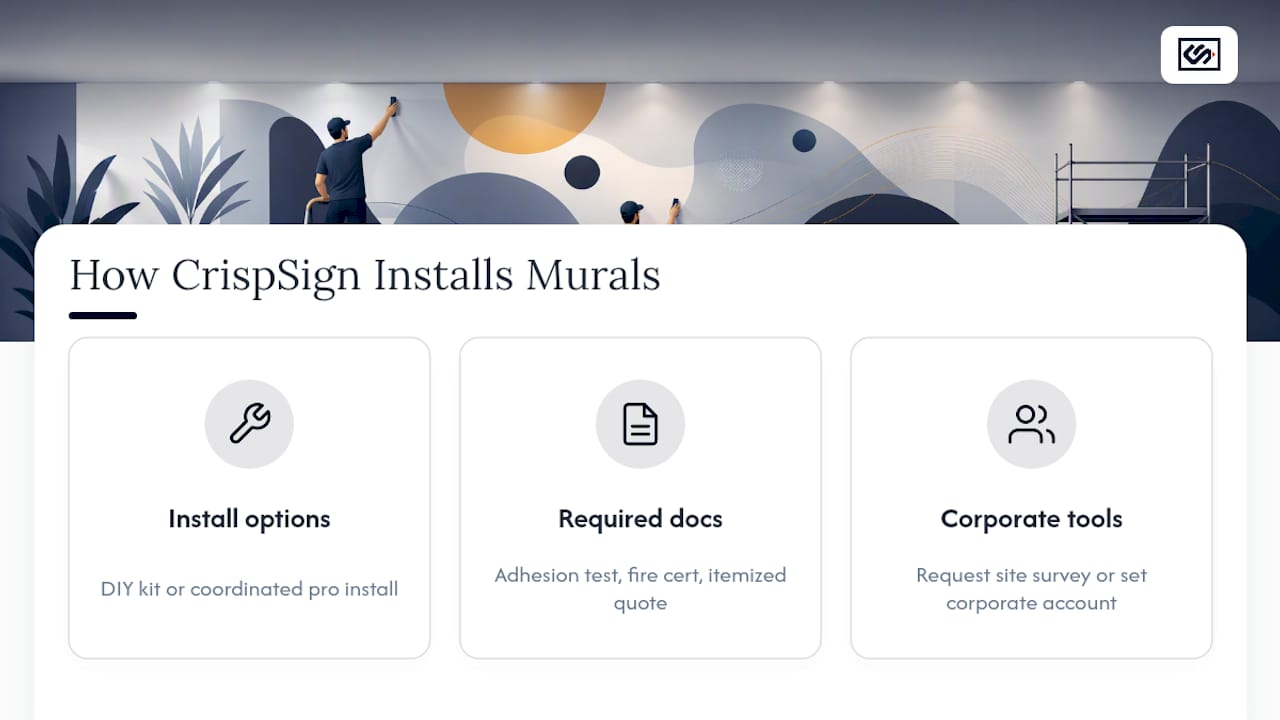
Some companies offer end-to-end services where you design your mural online, fabrication is done to specification and shipped nationwide, and you can choose either a do-it-yourself install kit or coordinated professional installation, without needing to find a local installer yourself.
Coordinated installs often include documentation such as adhesion test confirmation, material fire certificates, and an itemized quote separating materials, labor, and access equipment so nothing is buried in vague line items. If you're opening a second or third location, that consistency matters even more, since a mismatched install at one site undercuts the brand experience at every other.
If you manage signage across multiple locations, the Crisp Corporate portal is built specifically for coordinating production and installation across a growing footprint. Request a site survey for your next location, or set up a corporate account to standardize the process before your next lease signing.
Sources
The technical guidance behind this article comes from manufacturer bulletins and installer field guides, useful reading if you want to go deeper on any single step.
- Avery Dennison — Instructional Bulletin: Interior wall graphics (Special Product Information)
- Graphics & Signage Install Readiness Guide — Teamwork
- Professional wall mural installation: The strategic guide for commercial spaces — Linemark
FAQ
Is DIY Wall Mural Installation Ever a Good Idea?
DIY works well for a single, small panel on smooth drywall in a low-visibility space. Anything multi-panel, above 8 feet, or facing customers should go to a professional installer to avoid alignment and adhesion issues.
What's the Best Material for a Commercial Lobby Wall Mural?
Polymeric or cast vinyl is the standard choice for smooth drywall in lobbies, since it offers strong adhesion and a clean finished look. Textured walls typically need a fabric covering instead.
How Long Does a Commercial Wall Mural Installation Take?
A single-wall install typically takes 4 to 8 hours, while multi-wall or complex projects with remediation needs can take several days.
Do I Need a Site Survey Before Ordering a Wall Mural?
Yes, for any multi-panel or high-visibility installation. A site survey catches moisture, plumb issues, and paint cure problems before they turn into adhesion failures after the mural goes up.
Can CrispSign Coordinate Installation Across Multiple Business Locations?
Yes. CrispSign designs and produces murals nationwide and offers coordinated installation options, with a dedicated corporate portal for businesses managing signage across several sites.