Weatherproof Signs for Business Owners: Match Site Conditions to Sign Type
For a windy sidewalk, a spring-mounted wind-resistant pavement sign beats a rigid A-frame every time. For a permanent storefront, aluminum panels with corrosion-resistant fasteners are the safer bet. Large-format displays hold up best as mesh banners, and vehicle graphics need laminated vinyl built for road grime and UV. The sections below walk through materials, mounting, and upkeep so you can order with confidence.
TL;DR:
- Spring-mounted pavement signs with water or sand fill are best for windy sidewalk locations, as they flex to dissipate gust energy and resist tipping.
- Aluminum panels last over five years outdoors and are suitable for long-term signage, unlike PVC or Coroplast, which typically last under two years.
- Proper ballast and a flexible frame significantly improve outdoor sign durability, especially during storms, compared to heavier rigid frames.
- Regular maintenance, including monthly cleaning and semi-annual inspection, can extend sign lifespan and prevent slow deterioration from water intrusion or fading.
- Choosing the right mounting hardware and material grades is more important than size, as a smaller, durable sign often outperforms a larger, fragile one.
Table of Contents
- Which Weatherproof Sign Options Fit Your Location?
- Which Materials Hold Up Best Outdoors?
- How Do You Keep a Sign From Blowing Over?
- How Should You Clean and Store Outdoor Signs?
- What Does Crispsign Recommend for Weatherproof Signage?
- What Actually Matters When You're Choosing a Sign
- Ready to Order Weatherproof Signage That Actually Holds Up?
- Sources
- FAQ
Which Weatherproof Sign Options Fit Your Location?
The right sign type depends less on your budget and more on where it's going and how long it needs to last. A sign bolted to a building faces different stress than one standing on a sidewalk corner catching gusts off passing traffic.
Here's how the main categories break down by real-world use:
- Wind-resistant pavement signs (A-frame style): Spring-mounted frames with fillable water or sand bases are the standard for exposed sidewalks, food trucks, and seasonal storefronts. They flex instead of tipping.
- Blade and flat panel signs: Aluminum or acrylic panels mounted flush or perpendicular to a building work best for permanent identity signage that needs to survive years outdoors without repainting.
- Banners and mesh signs: Large-format vinyl or mesh banners cover fences, scaffolding, and building fronts where square footage matters more than rigidity. Mesh lets wind pass through instead of catching it, which is why large-format vendors specify it for windy building wraps.
- Vehicle and window graphics: Cut-vinyl decals, removable magnets, and full wraps turn a delivery van or storefront window into moving or standing advertising, built to handle washes, sun exposure, and highway speeds.
Portability matters too. If you're moving a sign daily (think a coffee shop pulling its sidewalk sign in at closing), a wheeled, spring-mounted frame saves your back, and can be complemented by small business SEO services to boost your local discoverability alongside effective physical signage. If the sign is going up once and staying for a decade, permanence and corrosion resistance matter more than convenience.
Which Materials Hold Up Best Outdoors?
Material choice determines whether a sign lasts two seasons or ten years, and the wrong pairing wastes money fast. A vinyl banner on a permanent monument sign fades and tears; an aluminum panel on a daily-moved sidewalk sign is needlessly heavy.
Aluminum is the standard for long-term exterior signage. It resists corrosion, holds paint and vinyl graphics well, and doesn't warp in heat, which is why providers commonly recommend it for maximum outdoor durability. PVC and corrugated plastic (Coroplast) sit at the other end: lightweight, cheap, and fine for a construction site or a 30-day promotion, but not built for years of sun exposure. Acrylic splits the difference, offering a polished look for lobby or blade signs but less impact resistance than aluminum. Vinyl graphics, when laminated, resist scratching and UV fading on vehicles and windows. Mesh, as noted above, trades density for wind tolerance on banners.
| Material | Typical Thickness | Outdoor Lifespan | Cost Tier |
|---|---|---|---|
| Aluminum | 0.040" to 0.080" | 5 to 10+ years | Mid to high |
| Acrylic | 1/8" to 1/2" | 3 to 7 years | Mid |
| PVC / Coroplast | 4mm to 10mm | 6 months to 2 years | Low |
| Vinyl with laminate | 3 to 4 mil film | 3 to 5 years | Low to mid |
| Mesh banner | 8oz to 13oz fabric | 2 to 4 years | Low to mid |
Pro Tip: If glare off a storefront window or pavement sign is a problem, an anti-glare cover usually solves it better than a thicker laminate. Laminate protects the print from scratching and moisture; anti-glare covers protect readability in direct sun.
How Do You Keep a Sign From Blowing Over?
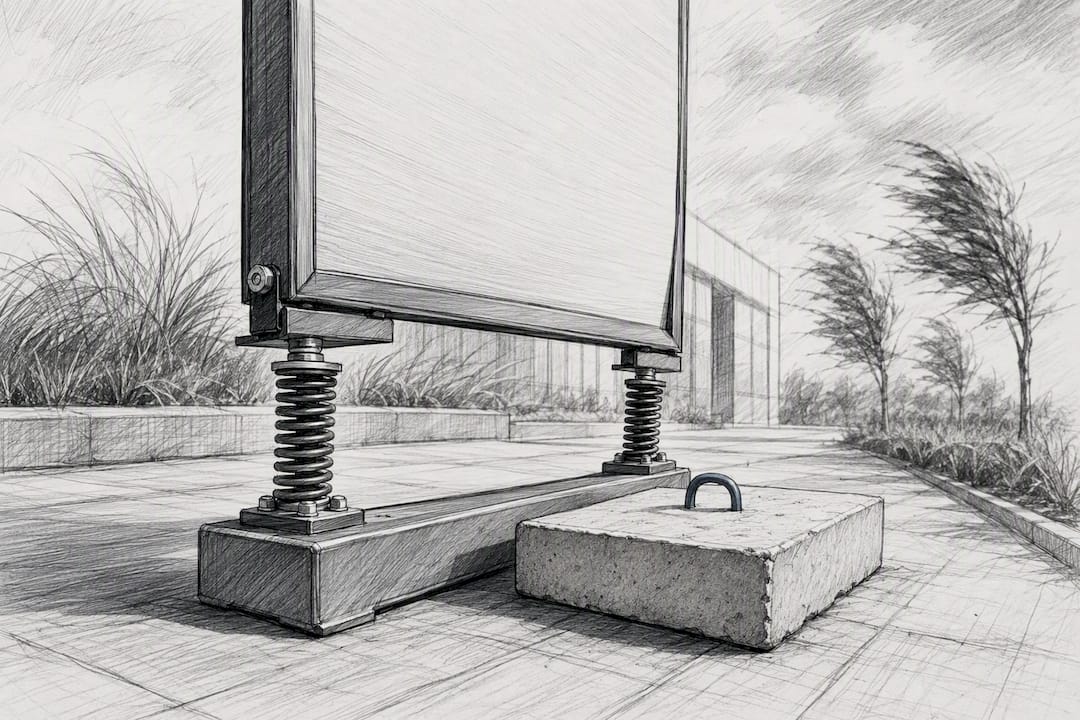
Wind is the single biggest reason outdoor signs fail early, and the fix isn't a heavier sign. It's a smarter frame. Spring-mounted pavement signs let the panel flex when a gust hits, absorbing that energy instead of transferring it straight to the base, which is why they outperform rigid frames in exposed spots. A rigid A-frame has nowhere for that force to go except into tipping over.
Ballast is the second half of the equation:
- Water-fill bases are convenient for daily setup and teardown, since you can empty them before moving the sign.
- Sand-fill bases weigh more per volume and suit signs that stay in one exposed spot for weeks or months.
- Wall anchors and standoffs are the permanent-install answer for building-mounted panels, letting air circulate behind the sign to reduce pressure buildup.
- Built-in wheels on pavement sign bases make repositioning painless without sacrificing ballast weight.
Some coil-spring frames with sand-filled bases carry vendor ratings for resisting head-on winds up to 50 to 60 mph, though you should always confirm the specific rating for the model you're buying rather than assuming it applies across a product line. Ask any installer three things: the frame's wind rating, the anchor type for permanent mounts, and the wind speed at which they recommend bringing the sign indoors. Even a well-rated sign should come in during severe storms; no outdoor sign is built to be hurricane-proof.
A spring-mounted frame with proper ballast survives conditions that would tip a rigid frame outright because the panel dissipates gust energy through flex instead of resisting it head-on.
How Should You Clean and Store Outdoor Signs?
Most sign failures aren't dramatic. They're slow fading, loosening fasteners, and water sneaking behind a panel over months of neglect. A simple routine catches problems before they turn into replacements.
- Wipe aluminum and acrylic panels with mild soap and water monthly; avoid ammonia-based cleaners on acrylic, which can cloud the surface.
- Check fasteners, gaskets, and mounting hardware every quarter for rust or looseness, especially on coastal or high-humidity sites.
- Inspect laminated vinyl and banners for edge peeling or fading twice a year, since UV damage usually starts at seams.
- Look behind panel signs for water intrusion after heavy rain, particularly around grommets and standoffs.
- Re-laminate or replace graphics once fading becomes noticeable from the street, rather than waiting until it's unreadable.
Pro Tip: If you're storing a portable pavement sign overnight, empty the water base before hauling it in. It's lighter, and an empty base also removes the temptation for anyone to leave (and lose) a filled sign outside where it can be taken.
What Does Crispsign Recommend for Weatherproof Signage?
Custom exterior signage is designed around how and where it will be installed, using production workflows optimized for faster turnaround without cutting corners on materials. Every order is built to specification, which means the aluminum gauge, laminate type, and mounting hardware match the site conditions you describe, not a generic template.
When requesting a quote, come prepared with a few specifics:
- Substrate thickness and material (aluminum, acrylic, PVC)
- Laminate or anti-glare cover requirements
- DIY versus coordinated professional installation
- Expected lead time for production and shipping
- Warranty coverage on materials and print
Crispsign's production process is built around getting professional-grade signage into your hands quickly, backed by a customer satisfaction guarantee on every order.
What Actually Matters When You're Choosing a Sign
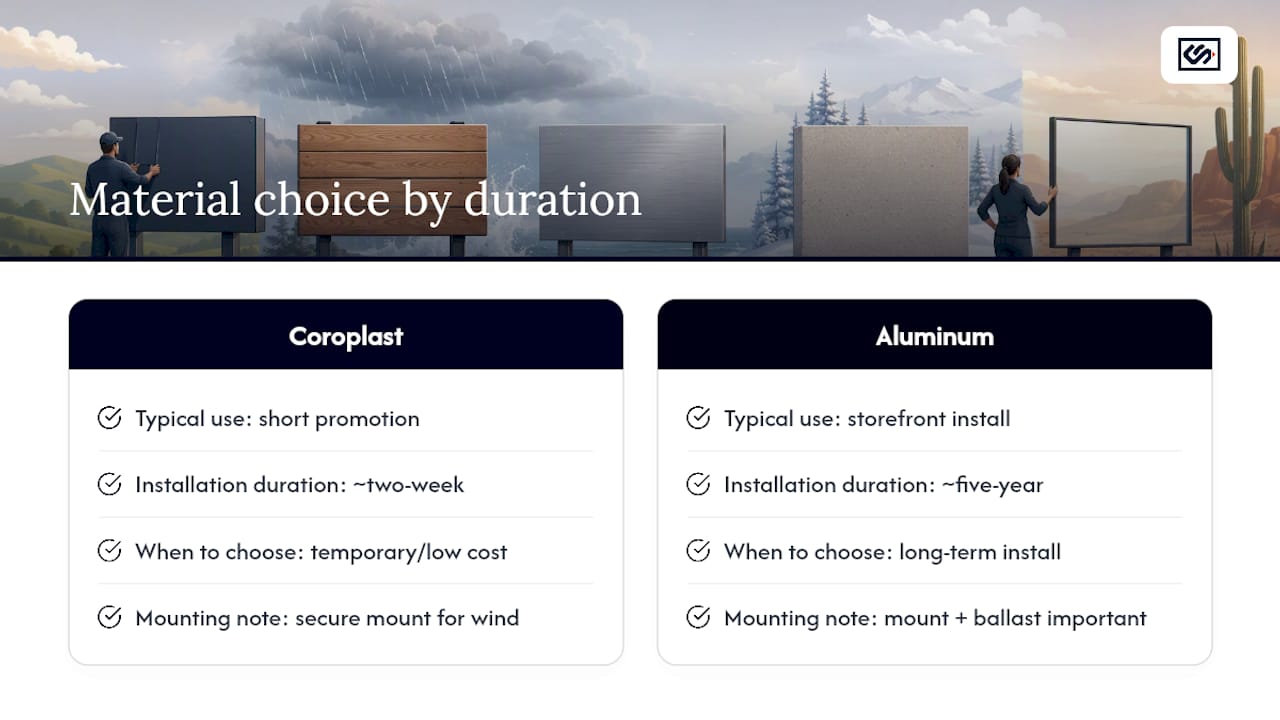
The conventional advice on outdoor signage spends too much time comparing materials in isolation and not enough time asking where the sign is actually going. Aluminum is not automatically "better" than Coroplast. It's better for a five-year storefront install and overkill for a two-week grand-opening promotion. That distinction gets lost in most buying guides, which rank materials like a leaderboard instead of a decision tree.
The bigger blind spot is wind. Business owners obsess over color and font choices and treat the base or mounting hardware as an afterthought, when it's usually the mounting that determines whether the sign is still standing in six months. A spring-mounted frame with the right ballast will outlast a heavier, rigid sign in the same spot.
If you're deciding where to spend your budget, spend it on the mount and the material grade before you spend it on size. A smaller sign that survives is worth more than a bigger one that needs replacing every season.
— Nick
Ready to Order Weatherproof Signage That Actually Holds Up?
Skip the guesswork of comparing materials on your own. Custom signage is built to specification, shipped nationwide, with optional coordinated professional installation available when desired.
If your business operates across several locations, the Crisp Corporate portal is built specifically for managing multi-location signage orders from one place, with production turnaround that keeps new locations from sitting bare while you wait on signage. Request a quote today, tell Crispsign your site conditions and material preferences, and get a custom build fabricated to those specs rather than a generic catalog item.
Sources
FAQ
How Long Do Weatherproof Signs Typically Last Outdoors?
Aluminum panels typically last 5 to 10 years or more outdoors, while PVC or Coroplast signs usually hold up for 6 months to 2 years depending on sun and weather exposure.
What's the Best Windproof Sign for a Sidewalk Location?
A spring-mounted pavement sign with a water or sand-fill base is the standard choice, since the flexible frame absorbs gust energy instead of tipping like a rigid A-frame.
Do I Need a Permit for Outdoor Business Signage?
Permit requirements vary by city and sign type, so check with your local building or zoning department before installing permanent exterior signage.
How Often Should I Clean an Outdoor Sign?
Wipe aluminum and acrylic panels monthly with mild soap and water, and inspect vinyl or banner graphics for fading or peeling at least twice a year.
Does Crispsign Offer Installation for Weatherproof Signs?
Yes, Crispsign coordinates optional professional installation alongside its custom sign production, so businesses can choose DIY setup or a fully managed install.