
Signage Compliance: A Retailer's Guide to Permit-Ready Signs

Signage compliance means meeting every code, permit, technical specification, and lease requirement that governs your storefront or exterior sign before it goes up. For U.S. business owners, getting this wrong isn't just a paperwork headache — it can mean stop-work orders, forced removal, and a delayed opening that costs real money.
The rules touch five main areas: municipal zoning ordinances, building and structural codes, electrical standards (primarily the National Electrical Code), ADA accessibility requirements, and private lease restrictions. Each one can independently block your sign from going up, which is why treating signage compliance as risk management from day one is the smartest move you can make.
Table of Contents
- What signage compliance actually covers for your storefront
- Which agencies enforce sign rules and how the permit process works
- Technical requirements you'll need to document
- Common mistakes that cost business owners time and money
- A practical compliance checklist for business owners
- What sign projects typically cost and how long they take
- How to choose the right partners for your sign project
- Key Takeaways
- The part most sign guides skip
- Crispsign makes permit-ready signage straightforward
- FAQ
- Useful sources
What signage compliance actually covers for your storefront
The U.S. has no single national sign code. What's permitted in one city may be prohibited two miles away, so you're always working against a patchwork of local ordinances, state codes, and referenced standards. Here's what that patchwork typically includes:
- Municipal sign ordinances and zoning: Size limits, maximum sign area, height restrictions, setbacks, number of signs per frontage, and prohibited types (flashing or intermittent signs are commonly banned). Local ordinances also define how sign area is measured, which varies by jurisdiction.
- Building and structural codes: The International Building Code (IBC) governs anchoring, mounting, and wind-load requirements. Large or freestanding signs typically require a licensed structural engineer's stamp.
- Electrical codes: NEC Article 600 governs all electric signs. UL listings — particularly UL 48 for electric signs — make inspections faster and reduce liability.
- ADA Standards: Tactile and Braille signage, mounting heights, and clear floor-space requirements apply to interior and exterior door signs. Small deviations can invalidate an entire installation.
- Historic-district and special-district controls: Design review boards in historic districts can restrict materials, colors, and illumination types beyond what municipal code requires.
- State DOT rules: Roadside and highway-adjacent signs must comply with state Department of Transportation regulations, which are separate from local zoning.
- Lease and landlord restrictions: Your lease may be stricter than city code on size, placement, or aesthetics. Lease clauses often require landlord approval before installation — and if your sign violates them, you pay for the redesign.
Which agencies enforce sign rules and how the permit process works
Enforcement is split across multiple agencies, and that's exactly where projects stall. The typical players are your municipal planning or zoning department, the building department, an electrical inspector, a historic-preservation board (if applicable), and state DOTs for roadside signs.
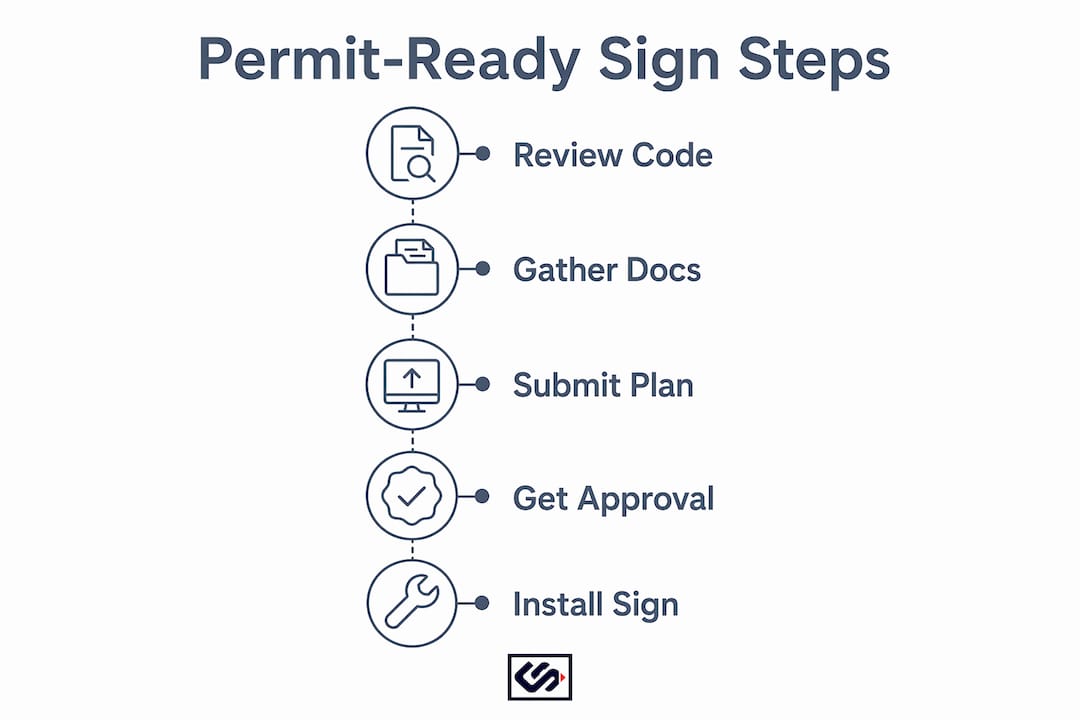
The permit workflow follows a predictable sequence:
- Pre-application: Pull the local sign ordinance and confirm zoning district rules. Check your lease signage clause before designing anything.
- Plan submittal: Submit drawings with dimensions, materials, mounting details, and structural calculations to the planning and building departments.
- Structural and electrical review: Engineering stamps and NEC compliance documentation are reviewed separately. Missing either one returns the entire submission.
- Permit issuance: Once all departments approve, the permit is issued and fabrication can begin.
- Installation and final inspection: A licensed electrician must connect illuminated signs. A final inspection closes out the permit.
Permitting delays are the top budget risk in any sign project. A single missing document — wind-load calculations, an engineering stamp, incomplete electrical specs — can restart the review clock and add weeks to your schedule.
Hiring a sign fabricator or permit expeditor with established relationships at your local municipal permit office is one of the highest-ROI decisions you can make. Vendors who know the reviewers, understand local submission formats, and have approved projects on file can cut approval time materially compared to a first-time submitter.
Pro Tip: Ask any sign vendor you're evaluating to name the specific permit offices they've worked with in your city and to show you a sample approved permit package. That one question separates experienced partners from vendors who will learn on your project.
Technical requirements you'll need to document
Most plan reviewers and inspectors ask for the same core documentation. Gathering it before submittal avoids the most common resubmission triggers.

| Requirement | What to Document |
|---|---|
| Sign dimensions and area | Total face area calculated per local ordinance measurement rules |
| Wind-load/structural calcs | Engineer-stamped calculations for signs above local size thresholds |
| Electrical specs | NEC Article 600 compliance, UL-listed components, licensed electrician |
| ADA tactile details | Raised characters, Grade 2 Braille, mounting heights to tactile characters set according to local ADA standards, clear floor space at door latch side as required by ADA standards |
| Digital sign brightness | Auto-dimming documentation; some codes impose brightness caps for digital signs |
| Materials and fire safety | Noncombustible mounting hardware, protected wiring, fire-rated materials where required |
For illuminated signs specifically, choosing UL-listed components and documenting NEC compliance up front both speeds electrical inspections and reduces your liability exposure. A licensed sign electrician is not optional for this work — it's a code requirement in most jurisdictions.
Common mistakes that cost business owners time and money
The most expensive errors are almost always avoidable. Here's where projects go wrong:
Missing wind-load calculations is the single most common resubmission trigger. Structural engineers are required for large or freestanding signs, and submitting without their stamp restarts the review entirely.
Lease-clause conflicts catch owners off guard more than any other issue. Municipal code may allow a 30-square-foot sign, but your lease may cap it at 20. The landlord's rules win on private property, and lease violations mean you pay for the rework out of pocket.
ADA tactile errors are deceptively costly. A Braille cell that's the wrong size, a mounting height that's two inches off, or a missing clear floor space can trigger complaints and require full reinstallation.
Noncompliant signs can result in stop-work orders, civil penalties, and forced removal — all of which cost more than getting the permit right the first time. Ongoing maintenance matters too: signs that shift, fade, or lose electrical components can fall out of compliance over time and trigger re-inspection requirements.
A practical compliance checklist for business owners
Follow this sequence before you approve a single design file:
- Pull your lease signage clause and note every restriction: size, placement, illumination, landlord approval process.
- Check the local sign ordinance for your zoning district: maximum area, height, setbacks, prohibited sign types, and how area is measured.
- Confirm historic-district or special-district rules if your location falls within one.
- Capture exact sign dimensions and verify they comply with both lease and municipal limits.
- Specify UL-listed electrical components and confirm your fabricator uses a licensed sign electrician for installation.
- Include ADA tactile elements in the design spec if the sign covers a door or accessible route.
- Commission structural/wind-load calculations from a licensed engineer for any sign above your jurisdiction's size threshold.
- Prepare the permit package: drawings, engineering stamps, electrical specs, and a landlord authorization letter.
- Schedule inspections before installation begins so there are no last-minute delays.
- Ask your vendor in writing who is responsible for permit submittal, inspection scheduling, and any resubmission costs.
Brands that build code review into their process from the start avoid late-stage redesigns and scale more predictably across multiple locations.
What sign projects typically cost and how long they take
Cost and timeline vary widely, but these are the main drivers:
- Sign type: Channel letters, pylon signs, and monument signs cost more and require more engineering than flat-panel or vinyl signs.
- Illumination: LED and neon signs add electrical permitting, licensed electrician fees, and UL documentation costs.
- Engineering fees: Required for large, freestanding, or structurally complex signs. Budget this as a non-negotiable line item.
- Permitting and inspection fees: Vary by municipality; some cities charge based on sign value, others on area. Historic-district review adds both time and fees.
- Timeline: A straightforward wall sign in a cooperative municipality can move from submittal to approval in two to four weeks. A pylon sign with structural review, historic-district approval, and electrical permitting can take two to four months. Resubmissions after review comments add weeks each time.
Budget a contingency for permit delays and potential lease-mandated rework. Projects that skip this contingency almost always need it. For complex permitting workflows, working with a permit coordination service can reduce review cycles and keep your project on schedule.
How to choose the right partners for your sign project
The right team depends on your sign type. Here's how to think about it:
For any illuminated sign: A licensed sign electrician is required by code. Verify their license with your state licensing board before signing a contract.
For large or freestanding signs: A licensed structural engineer must stamp the wind-load calculations. Ask for their PE license number and confirm it's valid in your state.
For complex or multi-location projects: A permit expeditor with local municipal relationships can shorten review cycles. Ask them to name specific permit offices they've worked with and provide references from recent approvals.
For all sign projects, request in writing:
- Timeline for permit submittal and expected approval window
- Sample approved permit packages from similar projects
- Engineering stamps and UL component documentation
- A clear responsibility matrix: who handles resubmissions, who pays for rework if the permit is rejected
Vetting these details up front prevents the most common and costly disputes.
Key Takeaways
Signage compliance requires checking municipal code, lease restrictions, ADA specs, and electrical standards before fabrication begins — permit delays are the top budget risk and the most preventable one.
| Point | Details |
|---|---|
| Check lease before code | Your lease may be stricter than city rules; violations mean you pay for redesign. |
| Permit delays are the top risk | Missing wind-load calcs or engineering stamps restarts the review clock and adds weeks. |
| ADA specs are precise | Tactile characters, Grade 2 Braille, and mounting heights compliant with ADA guidelines must be exact. |
| UL-listed components speed inspections | NEC Article 600 compliance and UL 48 listings reduce electrical inspection friction. |
| Crispsign handles permit coordination | Crispsign manages engineering, electrical, and permit submittals for storefront and ADA signage. |
The part most sign guides skip
Most articles on signage compliance treat the permit as a formality — a box to check after the design is done. That framing gets owners into trouble every time.
The permit process is where your design gets stress-tested against reality: local measurement rules, structural requirements, lease restrictions, and ADA specs that no amount of good intentions can override. Owners who treat compliance as a design constraint from day one — not an afterthought — consistently avoid the expensive surprises: the resubmission that adds three weeks, the landlord who rejects the sign the day before installation, the ADA complaint filed six months after opening.
The other thing worth saying plainly: the complexity here is real, but it's not unmanageable. The businesses that get their signs up on time and on budget are almost always the ones who hired partners with genuine local permit experience, documented every responsibility in writing, and built contingency into the budget before they needed it. That's not luck. It's just good project management applied to signage.
Crispsign makes permit-ready signage straightforward
Getting a sign fabricated to spec is one thing. Getting it permitted, ADA-compliant, and installed without delays is where most projects run into trouble. Crispsign handles both.

Crispsign's storefront and ADA-compliant signage services include permit coordination, engineering documentation, and licensed electrical installation — so you're not managing three separate vendors while your opening date slips. From channel letters to lobby signs, every project is fabricated to your exact specs with the compliance documentation built in from the start. Request a permit-aware quote from Crispsign and get your sign designed, approved, and installed the right way.
FAQ
What is signage compliance for a U.S. business?
Signage compliance means your sign meets all applicable municipal zoning rules, building and electrical codes, ADA requirements, and lease restrictions before installation. Non-compliance can result in stop-work orders, fines, or forced removal.
Do I need a permit for every storefront sign?
Most illuminated signs and signs above a certain size threshold require a permit; thresholds vary by city. For example, New York City requires a permit for any sign larger than six square feet or that is illuminated.
What happens if my sign violates my lease but meets city code?
Your landlord's rules take precedence on private property. A sign that violates your lease clause can be ordered removed at your expense, even if it passed the municipal permit review.
Which ADA requirements apply to storefront signs?
Tactile signs must use raised characters with Grade 2 Braille, mounted at 48–60 inches to the tactile characters, with an 18×18-inch clear floor space at the door latch side for door signs.
How do I shorten the permitting timeline?
Hire a fabricator or permit expeditor with established relationships at your local permit office, and submit a complete package — including wind-load calculations and engineering stamps — on the first attempt to avoid resubmission delays.
Useful sources
These primary sources are the most authoritative references for U.S. signage compliance. Confirm requirements directly with your local building or planning department, as rules vary by jurisdiction.
- NYC Department of Buildings — Business Signs: Permit thresholds, licensed sign hanger requirements, and structural/engineering submittal rules for New York City.
- ADA Accessibility Guidelines — Chapter 7: Signs: The U.S. Access Board's definitive guidance on tactile characters, Braille specs, mounting heights, and clear floor-space requirements.
- San Francisco Planning Department — Signs: A clear example of how a major U.S. city structures sign permit review across multiple departments.
- Colorado Springs Unified Development Code — Signs: Illustrates local ordinance detail: measurement rules, digital sign brightness requirements, exemptions, and prohibited sign types.
- Your local municipal building or planning department: The primary source of truth for permit fees, submission formats, review timelines, and jurisdiction-specific rules. Always confirm requirements there before finalizing your design.