
How to Attract Customers with Window Signs
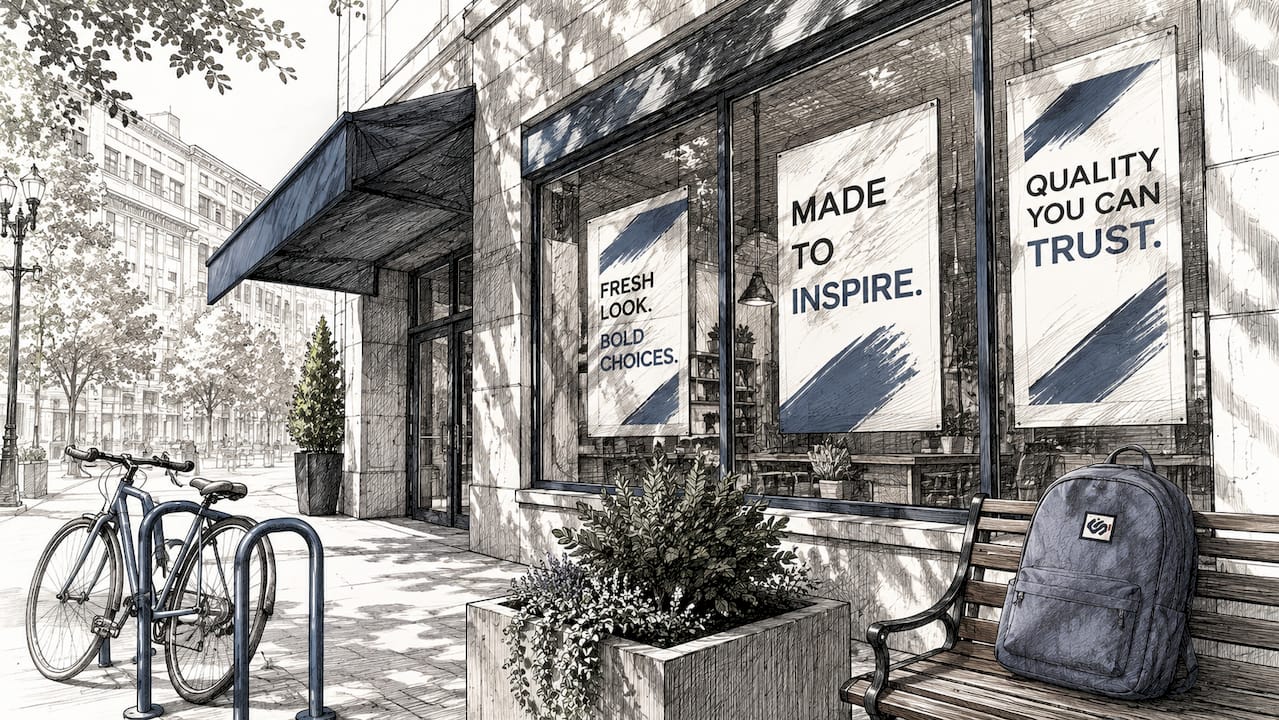
Window signage is the most immediate, lowest-cost marketing tool a storefront business owns. Pedestrians decide to enter within 2.3–3 seconds of seeing your storefront. That decision happens before they read a menu, check a review, or notice your hours. If your windows are blank, cluttered, or faded, you lose that customer before they ever reach your door. This guide gives you a practical, step-by-step approach to effective window signage, from planning and design to placement and maintenance, so your storefront works as hard as you do.
How do window signs attract customers to your business?
Window signs attract customers by delivering a clear, visual message at the exact moment a passerby decides whether to stop or keep walking. In the industry, this is called point-of-purchase communication, and it operates on the same psychological principles as any first impression. Your window is the sign your building wears.
A well-designed window display acts as social proof before entry. It signals confidence in your product, justifies your pricing, and reduces the anxiety a new customer feels about walking into an unfamiliar place. An empty window, by contrast, reads as a business with nothing to say. That silence costs you foot traffic every single day.
Upgrading signage increases sales by an average of 10% for businesses that make the change. That number reflects a simple truth: your sign is a salesperson who never calls in sick. Unlike digital ads that stop working the moment you stop paying, signage works 24/7 as a marketing asset you own outright.
What do you need before designing your window signs?
Preparation determines whether your signage performs or just occupies space. Before you design anything, answer three questions: Who walks past your window? When do they walk past? What do you want them to do?
Understanding your foot traffic patterns tells you which windows get the most eyes and at what time of day. A coffee shop on a commuter street needs a morning-focused message on the window facing the sidewalk. A dinner restaurant needs illuminated signage visible after dark. Traffic pattern analysis aligns your graphics with pedestrian sight lines and dwell points to maximize impact.
Material selection matters as much as design. Your main options include:
- Vinyl decals: Durable, weather-resistant, and easy to replace for seasonal updates
- Perforated window film: Lets you cover large glass areas while maintaining interior visibility
- Frosted glass film: Adds privacy and a polished look, ideal for professional services
- Backlit film: Works with interior lighting to create illuminated effects at night
ADA and visual accessibility standards require high contrast, readable fonts, and appropriate sizing. Meeting these standards does not limit your creativity. It broadens your customer reach by making your message legible to everyone, including people with low vision.
Pro Tip: Before ordering any material, photograph your window at different times of day. Morning glare and afternoon sun can wash out colors that look perfect on screen.
| Consideration | What to decide |
|---|---|
| Foot traffic direction | Which windows face the highest pedestrian volume |
| Lighting conditions | Whether you need backlit or reflective materials |
| Message duration | Permanent branding vs. seasonal promotional content |
| Regulatory compliance | Local permit rules and ADA accessibility requirements |
| Budget and timeline | Material cost vs. production and installation lead time |
How do you design window signs that stop people in their tracks?
The design principle that separates effective window signage from decorative clutter is hierarchy. Your sign needs one primary message that reads in under three seconds, supported by secondary details a customer can absorb if they stop.
Follow this sequence when building your design:
- Lead with one clear claim. "Best tacos in the neighborhood" or "Same-day alterations" tells a passerby exactly what you offer and why it matters to them.
- Use bold, high-contrast colors. High contrast and simple fonts are the single most reliable way to improve readability at a glance. Black on white, white on dark blue, yellow on black all work. Pale text on a light background does not.
- Add a visual anchor. For food businesses, professional food photography triggers cravings more effectively than real food displays. For retail, a single product image outperforms a collage every time.
- Show pricing or a promotion. Transparent pricing reduces customer anxiety before they walk in. A "Lunch from $12" sign removes the barrier of uncertainty.
- Include a QR code at eye level. QR codes on window signs accelerate customer decision-making by giving instant access to your menu, booking page, or current offers.
Design hierarchy also means knowing what to leave out. Every element you add competes for attention with every other element. A sign with five messages delivers none of them. Pick your one strongest offer and build the design around it.
Pro Tip: Print a full-scale paper mockup and tape it to your window before ordering. Step back 20 feet and read it. If you can't read it in three seconds, simplify.
The role of signage in brand identity goes beyond the message itself. Your font, color palette, and graphic style should match your interior, your packaging, and your digital presence. Consistency builds recognition. Recognition builds trust.
Where should you place window signs for maximum impact?
Placement is the variable most business owners underestimate. A great design in the wrong location produces weak results. The right placement turns a good design into a consistent customer generator.
Position your primary sign at eye level on the window pane that faces the direction most pedestrians approach from. Eye level means 5–6 feet from the ground for standing adults. Signs placed too high or too low lose the attention of people in motion.
Key placement principles:
- Face the traffic flow. If foot traffic moves left to right past your storefront, your primary message should be on the left window so people read it as they approach, not as they pass.
- Use illuminated signage for low-light conditions. Illuminated signs increase visibility at night and in poor weather, which matters especially for restaurants, bars, and any business open after 6:00 PM.
- Avoid blocking interior sightlines completely. Customers want to see inside before they commit to entering. Perforated film or partial coverage lets light and visibility through while still carrying your message.
- Rotate content seasonally. Seasonal window refreshes fight visual habituation and keep regular passersby engaged. A window that never changes becomes invisible to the people who walk past it every day.
| Placement factor | Best practice |
|---|---|
| Height | 5–6 feet from ground for primary message |
| Traffic direction | Lead window faces the direction pedestrians approach from |
| Lighting | Backlit or illuminated for evening and overcast conditions |
| Coverage | Partial coverage preserves interior visibility and natural light |
| Rotation frequency | Update at least quarterly or for major promotions |
What mistakes cause window signs to underperform?
Most underperforming window signs share the same problems. Recognizing them early saves you money and lost foot traffic.
The most common error is clutter. Business owners want to communicate everything at once: hours, services, prices, social handles, promotions, and a logo. The result is a sign that communicates nothing. A passerby moving at walking pace cannot process more than one clear message. Cut everything that is not your strongest offer.
Faded or outdated signs actively damage your brand. Signs older than five years or signs lost in visual noise cause measurable revenue loss. A peeling vinyl decal or a sun-bleached poster tells customers your business does not pay attention to detail. That impression carries inside.
Other mistakes to avoid:
- Ignoring local permit rules. Many municipalities regulate sign size, placement, and lighting. Check before you install.
- Using real food in window displays. Real food decays and looks unappetizing within hours. Professionally produced silicone food replicas maintain an appetizing appearance indefinitely and outperform real displays in customer engagement.
- Skipping performance review. Track foot traffic before and after any signage change. Even a simple door count gives you data to work with.
For a full breakdown of what not to do, the storefront signage mistakes guide from Crispsign covers the most costly errors business owners make in 2026. You can also review exterior sign mistakes that apply directly to window placement and design decisions.
Pro Tip: Set a calendar reminder every 90 days to walk outside and look at your windows the way a new customer would. You will catch problems you stopped seeing because you walk past them every day.
Key Takeaways
Window signs are your highest-ROI, always-on marketing asset, and their performance depends entirely on clear design, strategic placement, and consistent upkeep.
| Point | Details |
|---|---|
| First impressions are fast | Pedestrians decide to enter within 2.3–3 seconds, so your primary message must read instantly. |
| One message wins | Cluttered signs communicate nothing; lead with your single strongest offer. |
| Placement drives results | Position signs at eye level facing the direction pedestrians approach from. |
| Lighting extends reach | Illuminated signage captures customers after dark and in poor weather conditions. |
| Refresh regularly | Rotating content seasonally prevents visual fatigue and keeps regular passersby engaged. |
Window signs are the most underrated asset in your marketing mix
I have worked with hundreds of small business owners, and the pattern is consistent. They spend thousands on social media ads, loyalty apps, and email campaigns, then leave their windows blank or covered in a sun-faded poster from three years ago. The irony is that the people most likely to become their best customers are walking past that window every single day.
Window signage is not glamorous. It does not have a dashboard or an algorithm. That is exactly why it works. It does not compete for attention in a feed. It owns the physical space where your customer is already standing.
The businesses I have seen get this right share one habit: they treat their windows as a living part of their marketing, not a one-time installation. They update for seasons, for promotions, for new menu items. They invest in professional design and durable materials because they understand that a cheap, faded sign costs more in lost customers than it saved in production.
My honest advice is this: before you spend another dollar on digital advertising, walk outside and look at your windows. If you would not stop, neither will anyone else.
— Nick
Crispsign builds window signs that work from the first glance
Your storefront deserves signage that performs every hour it is up. Crispsign designs and produces custom window signs fabricated to spec for small and medium-sized businesses across the country, with fast turnaround and materials built to last through weather, seasons, and daily foot traffic.
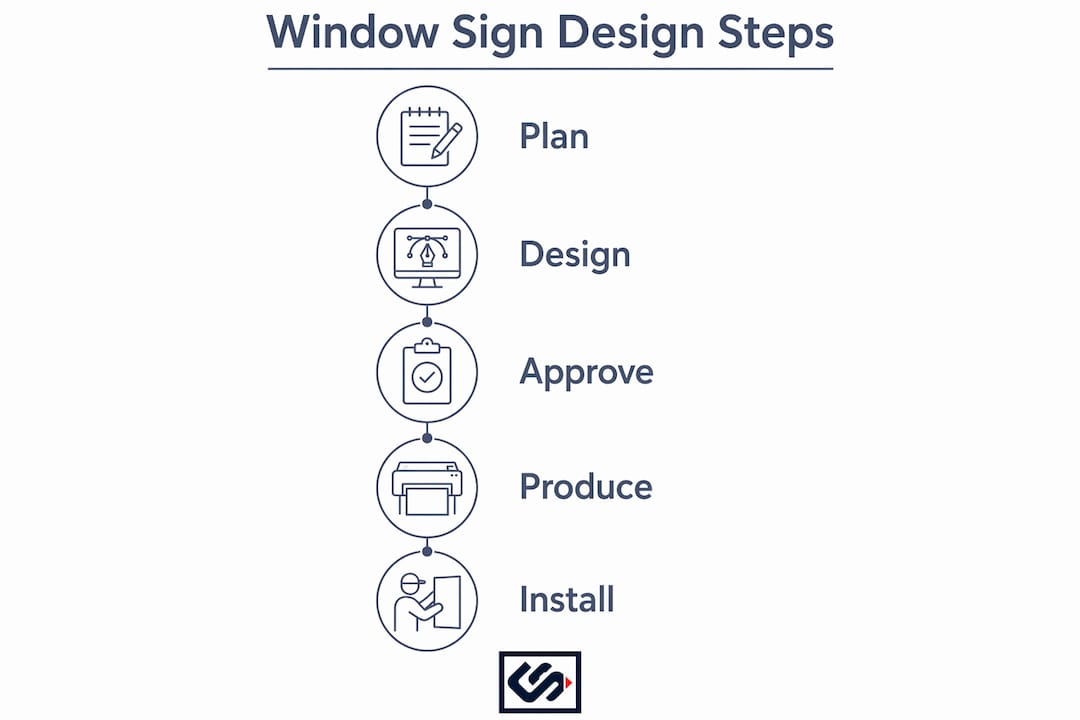
From ADA-compliant lobby and window signage to full-coverage perforated film and vinyl decals, Crispsign handles the production process so you get professional results without the back-and-forth. If you want signage that extends beyond your storefront, vehicle decals and magnetic signs carry your brand wherever your fleet goes. Request a quote and get your storefront working for you.
FAQ
How quickly can window signs increase foot traffic?
Strategic window graphics can increase walk-in traffic by 31% within six weeks of installation. Results depend on design quality, placement, and foot traffic volume at your location.
What type of window sign material lasts the longest?
Cast vinyl decals and perforated window film are the most durable options for exterior window signage. They resist UV fading, moisture, and temperature changes better than paper-based or standard adhesive materials.
Do window signs need to meet ADA requirements?
ADA guidelines apply primarily to interior and wayfinding signage, but accessibility best practices such as high contrast, readable fonts, and appropriate sizing improve effectiveness for all window signs and broaden your customer reach.
How often should you update your window signs?
Update window signs at least quarterly or whenever you run a major promotion. Seasonal refreshes prevent visual fatigue among regular passersby and signal to new customers that your business is active and current.
Can window signs help restaurants increase order value?
Yes. Strategic restaurant window graphics are linked to an 18% increase in average order value within six weeks. Displaying featured dishes, pricing, and promotions reduces customer hesitation and primes purchasing decisions before they enter.